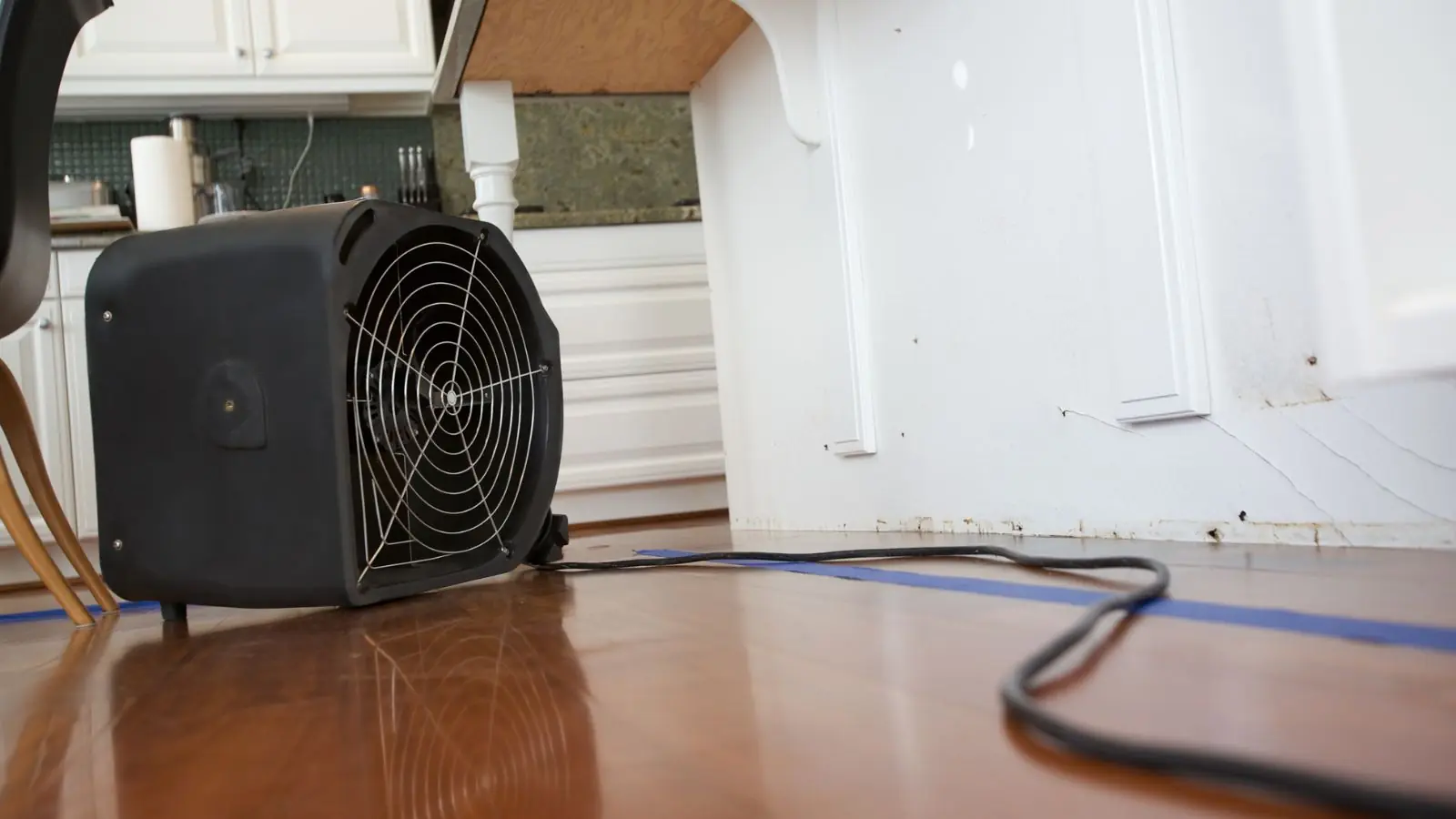
What Kitchen Water Damage Means
Kitchen water damage restoration is the removal, drying and repair of materials soaked by water in the room where plumbing, appliances and cabinetry sit closest together. A small sink leak can wet a cabinet floor, run under the cabinet base and reach the subfloor within hours. The 24/7 line at (301) 936-0619 takes these calls, and same-day response is offered when available.
This page covers the kitchen as a room. If the water came from a dishwasher, refrigerator line or washer, the cause is covered on the appliance leak water damage page. Here the focus is what the water did to the cabinets, floor and walls.
Where Water Travels in a Kitchen
Kitchens hide water better than most rooms, because the cabinets sit on top of the places that stay wet.
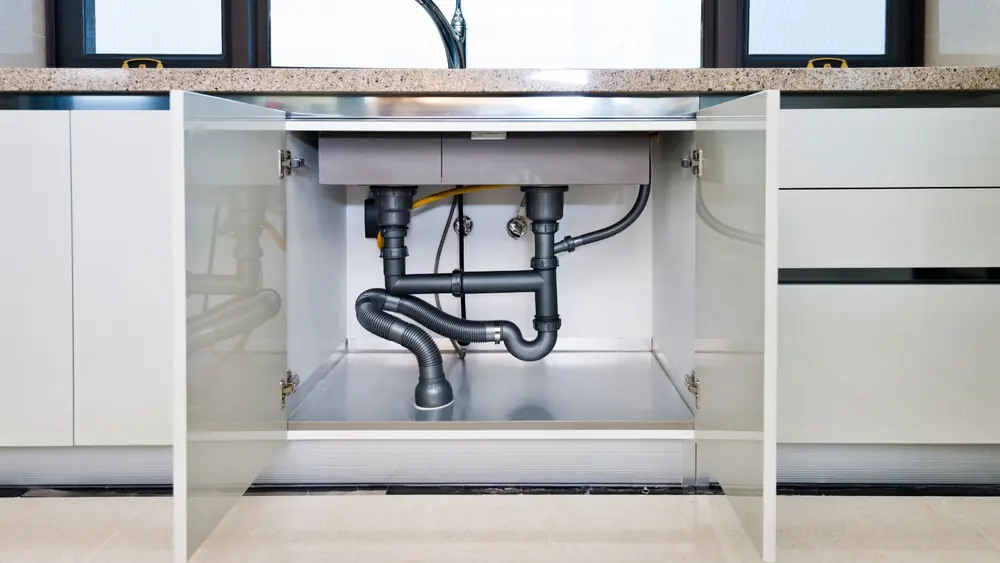
Under the sink
Supply lines, shutoff valves, the drain trap and the garbage disposal all sit in a small cabinet. A slow drip often shows up first as a swollen cabinet floor.
Behind the toe kick
The toe kick is the recessed panel at the base of the cabinets. Water collects behind it and wets the cabinet bottoms and subfloor out of sight.
Under the cabinet base
Cabinets are often installed before flooring in many kitchens, so water can run under the whole run of cabinets and across the subfloor beneath them.
Flooring transitions
Water follows seams, thresholds and the edge where tile or vinyl meets hardwood or carpet. Wet trim and wall bases show where it traveled.
Walls and ceilings below
A leak on a second-floor kitchen drips into the ceiling below. A leaking supply line inside a wall wets drywall behind the sink.
First Safety Steps in a Wet Kitchen
Kitchens mix water, power and gas
Shut the fixture valve under the sink, or close the main valve if the water keeps running. Outlets for the dishwasher, disposal and microwave sit near water, so cut power to wet areas only if the panel is dry and safe to reach.
- If water touches outlets or the panel, stay out and call 911 and your electric utility before the line.
- If you smell gas near a range, leave the building and call 911 and Washington Gas from outside. The leak line is 844-WASHGAS, option 1.
- Move food, small appliances and valuables up onto dry counters. Do not pull a heavy refrigerator through standing water.
- Do not open or lift swollen cabinet panels yet. They can crumble and hide wet insulation.
What Comes Out and What Dries in Place
The honest answer depends on the material and how long it was wet. This table shows the usual starting points.
| Material | Often dried in place | Often removed |
|---|---|---|
| Solid wood or plywood cabinet boxes | Surface-wet and caught within a day or two | Swollen, delaminating or contaminated |
| Particleboard cabinet bases and toe kicks | Rarely, once they swell | Usually, since they soften and do not recover |
| Tile with stable grout | Often, with the subfloor dried below | If the setting bed stays wet |
| Vinyl plank and sheet vinyl | If lifted promptly to dry the subfloor | If water is trapped beneath |
| Subfloor under cabinets | Plywood, if drying reaches it | If it stays soft or swollen |
| Drywall behind the sink | Rarely if wet over 24 to 48 hours | Usually, cut above the wet line |
Category matters too. A clean supply line leak is Category 1 under the ANSI/IICRC S500 standard. Dishwasher or sink drain water is more contaminated, and contaminated porous materials usually come out.
Water in the kitchen?
Call the 24/7 line at (301) 936-0619 before the cabinets swell and the subfloor soaks.
How Wet Cabinets and Floors Get Dried
- 1
Find the wet areas
A moisture meter and thermal imaging camera show water in the cabinet bases, subfloor and walls before anything is cut.
- 2
Open access
Toe kicks come off, and small holes or panels are opened so air and drying equipment reach the cabinet cavity.
- 3
Extract and dry
Wet vacuums remove the standing water. Air movers and LGR dehumidifiers, sometimes with drying mats under floors, dry the room.
- 4
Remove what cannot recover
Swollen cabinet bases, soaked pad or flooring and wet drywall are removed. Readings guide each decision.
- 5
Dry check and handoff
Daily readings confirm dry framing and subfloor before a repair crew rebuilds. See water damage repair for the rebuild stage.
Older Hyattsville Kitchens and Rented Ones
The National Register entry says Hyattsville developed mostly after the 1870s, and the city counts nearly 1,000 buildings in its Historic District. A kitchen in a building of that age may have older supply lines and drains inside walls and under floors. It may also have been remodeled in layers, with new cabinets over older subfloor.
The Census Bureau's QuickFacts shows Hyattsville's owner-occupied rate at 48.4 percent, so about half of households rent. If you rent, tell the landlord in writing, photograph the damage and keep the receipts for anything you move or throw away. Renters policies generally cover belongings, not the building.
What Changes the Size of a Kitchen Job
Sink cabinet only
Scope: one cabinetA supply line drip caught early, with the cabinet floor dried in place.
Cabinet run and flooring
Scope: one wallToe kicks open, floor lifted near the cabinets, and several days of drying.
Whole kitchen floor
Scope: full roomWater under every cabinet. Cabinets may need to be pulled to dry the subfloor.
Kitchen with a ceiling below
Scope: two levelsDrying plus ceiling and wall cavity work on the level underneath.
Water category, cabinet material, flooring, access and drying days set the price, and it is explained before work starts.
Does Insurance Cover a Kitchen Leak?
Sudden or slow
The Maryland Insurance Administration says most homeowners policies will not cover damage from a slow leak, and many will not pay to repair or replace the pipe or drain itself. A sudden break under the sink is treated differently from a drip that went on for months.
Check your policy, photograph the cabinets and floor before anything is removed, and ask your insurer what applies. Do not assume a claim will be approved.
Mistakes That Ruin Kitchen Cabinets
- Mopping and moving on. Water under cabinets stays wet and wicks into the subfloor.
- Running a space heater at the cabinets. Fast heat can warp panels and dries the surface only.
- Re-installing a toe kick over a wet cavity. It traps moisture where it can grow mold. The EPA advises drying within 24 to 48 hours, and see mold remediation if the cavity smells musty.
- Replacing the floor before the subfloor reads dry.
- Skipping the plumber. Drying does not fix a leaking trap or valve.
Dry Standards and Nearby Service
Drying goals follow published standards, and ANSI/IICRC S500 is the standard for professional water damage restoration. The equipment and monitoring are explained on the structural drying page. Crews also respond to kitchen calls in nearby Bladensburg and College Park.
Kitchen water damage questions from Hyattsville residents
Yes. The line at (301) 936-0619 runs 24/7, including nights and weekends. Same-day response is offered when available, and no arrival time is promised on the call.
The dispatcher will tell you how to shut off the water while you wait.
Not always. Solid wood or plywood boxes caught early can often dry in place with toe kicks removed. Particleboard bases that have swollen usually have to go. Readings decide.
Often, yes. Crews open toe kicks and use drying equipment under and behind the cabinets. If the subfloor stays wet, cabinets may have to be pulled.
Dishwasher drain water is more contaminated than a clean supply line, so more porous material may be removed. The cause is covered on the appliance leak page.
Permit rules vary by the work. Ask Prince George's DPIE or the city before rebuilding walls, electrical or plumbing. WSSC Water is the plumbing inspection agency for the county.