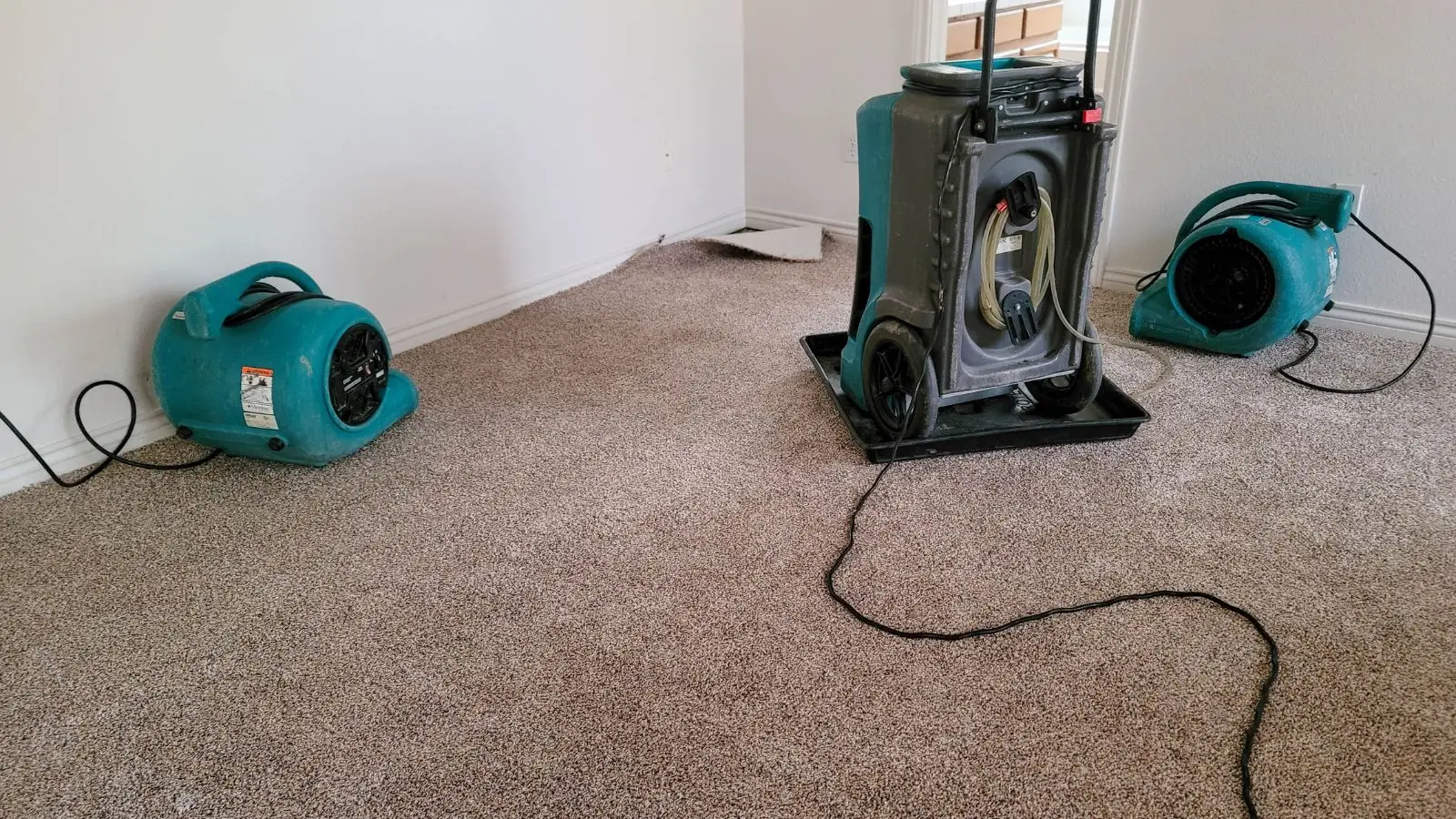
What structural drying means after a water loss
Structural drying and dehumidification in Hyattsville, MD is the controlled removal of moisture from the building itself: framing, subfloor, drywall, plaster, insulation and concrete. Standing water may be gone, but wood and gypsum soak it up like a sponge and release it slowly. Without equipment, that moisture can stay in a wall for weeks.
This is a different job from pulling water off the floor, which emergency water removal covers, and a different job from rebuilding, which water damage repair covers. Drying sits between them. It is the phase where equipment runs, readings are logged each day and a goal tells everyone when the work is finished.
The EPA advises drying water-damaged areas and items within 24 to 48 hours to prevent mold growth. That window is the reason crews set equipment on the first visit and do not wait for the next week.
Signs that a building is still holding water
A surface that feels dry can hide a wet core. Paint that bubbles, baseboards that pull away from the wall, a floor that feels cool or slightly soft, and a musty smell that returns each morning all point to moisture inside the material.
Window glass that fogs on the inside in a closed room is another clue. It means the air is carrying more water vapor than the room should hold. Fixing that takes dehumidification, not a fan alone.
If you also see fuzzy or dark growth, that is a mold remediation question with its own published standard, ANSI/IICRC S520. The drying team can map where the moisture is, which tells the mold crew where to look.
Safety first: what to do before drying equipment arrives
Hour-one safety steps
Equipment cannot start until the source of water is stopped. Close the fixture shut-off valve, or the main water valve if you cannot find the local one. Lift furniture legs off wet carpet and move valuables to a dry room.
- If water has reached outlets, a panel or a ceiling fixture, stay out of that area. Cut power at the breaker only if the panel is dry and you can reach it safely.
- If you smell gas, leave the building and call 911 and the gas company from outside. Washington Gas lists a leak line at 844-927-4427.
- Call your electric utility or 911 for any sparking, buzzing or scorched outlet before you call the line.
- Keep people and pets out of any water that came from a sewer, a floor drain or a flood. Sewage backup into a home can be reported to WSSC Water at 301-206-4002.
- Do not run a household fan over a wet ceiling that is sagging. The ceiling can drop.
How a drying job is run from day one to the final reading
Every drying job follows the same arc, though the equipment count changes with the size of the loss.
- 1
Map the moisture
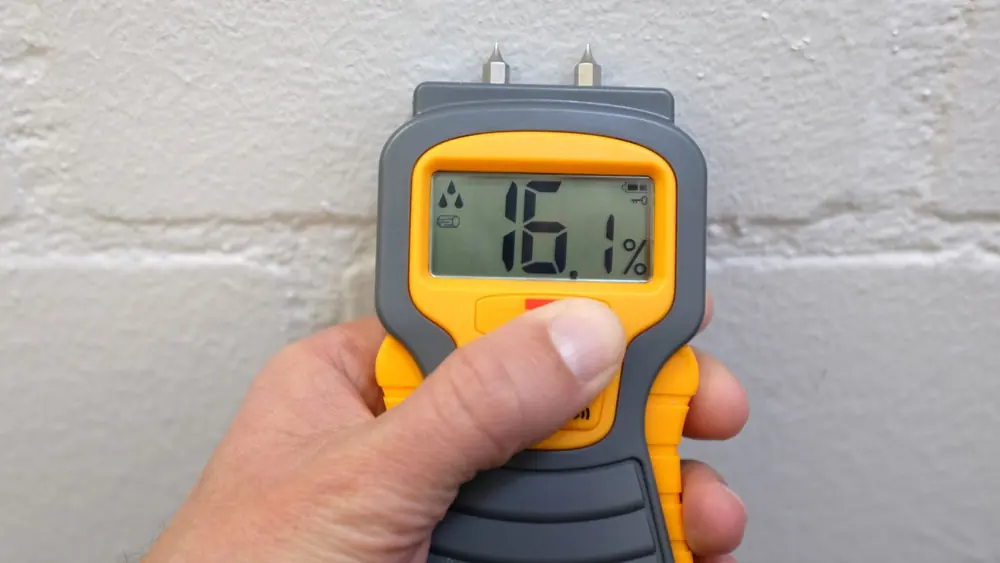
A technician sweeps the rooms with a moisture meter and a thermal imaging camera, then marks wet areas so the plan rests on readings and not on guesses.
- 2
Set the drying goal
The goal comes from an unaffected area of the same building, with the same materials. Industry practice for this is described in ANSI/IICRC S500, the published standard for professional water damage restoration.
- 3
Place air movers and dehumidifiers
Air movers push dry air across wet surfaces. LGR dehumidifiers pull the water out of that air and send it down a hose or into a collection tank.
- 4
Open the cavities
Small holes or removed baseboards let warm air reach the space inside a wall. Without that step the drywall face dries and the wet stud behind it does not.
- 5
Check and adjust daily
Readings are taken each visit. Equipment gets moved, added or pulled as the wet zone shrinks, and the job ends when the numbers meet the goal.
Need the equipment running?
Call (301) 936-0619 and describe what is wet. Scope and price are explained before work starts.
The equipment, in plain words
Most of the machines are simple. What matters is where they sit and how long they run.
| Tool | What it does | Where it is used |
|---|---|---|
| Moisture meter | Reads the moisture level in wood, drywall and concrete | Every wet room, at the start and at every visit |
| Thermal imaging camera | Shows cooler, wetter zones behind a surface | Ceilings, walls and floors that look dry |
| Air mover | Moves air in a thin layer across a wet surface | Floors, wall bases and open cavities |
| LGR dehumidifier | Pulls water vapor out of the air at a low grain level | Most closed, heated rooms |
| Desiccant dehumidifier | Dries air with a moisture-absorbing wheel, even when it is cold | Cool basements and unheated spaces |
| Floor drying panels or mats | Pull moisture up through a floor that should stay in place | Hardwood and some engineered floors |
| Injection or cavity drying system | Pushes dry air into a closed wall space through small holes | Wall cavities and under cabinets |
Ask any company which of these it plans to bring and where each one will sit.
Why drying takes three days in one house and eight in another
There is no standard number of days. Material, thickness, water category and the building air all change the pace. Solid hardwood and plaster release water slowly, and thin carpet and drywall release it faster.
Weather matters too. NOAA climate normals for the nearest long-term station, Reagan National Airport, show a July mean temperature of 81.0 F and about 41.82 inches of precipitation in a typical year. Warm, damp outdoor air in summer makes it harder to dry a house with windows closed, and dehumidifiers do much of the work.
The Hyattsville Historic District has nearly 1,000 buildings, according to the city history page, and the National Register entry says the town grew mostly after the 1870s. Older buildings can have dense plaster, tight wall cavities and layers of old paint. Those details can slow drying and make cavity access more important.
What makes a drying job larger or smaller
One wet wall or one corner
Scope: smallA few air movers and one dehumidifier, short run time, clean-water source.
One room with a wet floor
Scope: moderateFloor and wall bases are both wet, so cavities are opened and more movers are placed.
Two rooms or a finished basement
Scope: largerSeveral dehumidifiers run, and daily readings track more than one material.
Multiple floors or multiple units
Scope: extensiveWater has traveled through ceilings and walls, so equipment and monitoring are spread across the building.
Contaminated or long-standing water
Scope: specializedMaterials are removed before drying starts, and monitoring runs longer.
Price is built from the area, the materials, the days of equipment and the water category. Scope and price are explained before work starts.
Insurance and drying documentation
What your policy may ask for
Sudden and accidental water damage, such as a failed supply line, is often covered by a homeowners policy. Slow leaks and neglect often are not. The Maryland Insurance Administration says most homeowners policies do not cover flooding, and that sewer or water backup is an optional endorsement insurers must offer.
Drying logs can help your claim file, because they show the dates, readings and equipment used. Check your policy and ask your insurer what documents it needs. The line cannot promise that a claim will be approved.
Common mistakes that stretch the drying time
Most delays come from small choices made in the first day.
Avoid these
- Closing the windows and running only a household fan. Fans move air but leave the water vapor in the room.
- Turning off equipment because the surface feels dry. Readings, not touch, decide when drying is finished.
- Covering a wet wall with paint, paneling or new flooring. Trapped water stays trapped.
- Moving dehumidifiers into the hallway so the noise is lower. The unit needs to be in the wet zone with doors mostly closed.
- Waiting a week to start. After the first two days, wet drywall and carpet pad may be past saving, and mold needs only moisture to grow.
- Skipping the question of the source. If a pipe is still dripping, the drying never ends. A plumber should fix the line before the equipment is set, and the water mitigation team can work around that visit.
Drying and renters in Hyattsville
The Census QuickFacts figure for 2020 to 2024 puts the owner-occupied rate in Hyattsville at 48.4 percent. That means about half of households rent, and in many apartment buildings one unit's leak reaches the unit below it.
If you rent, report the loss to your landlord in writing right away and take photos. The Maryland Insurance Administration notes that renters policies cover your belongings and not the building. The owner of the building controls access to wall cavities and shared systems, so drying often needs a joint plan.
The same drying steps apply in neighboring towns such as College Park and Riverdale Park.
Structural drying questions from Hyattsville homes
The line is open 24 hours a day, seven days a week. Same-day response is offered when available, but no arrival time is promised. Describe what is wet and whether the source is stopped, and the dispatcher will explain what happens next.
A moisture meter gives numbers, and the numbers are compared to the drying goal set from dry material in the same building. Ask for the readings from each visit. A floor that feels dry to the hand can still read wet.
Fans move air, but they do not remove water from it. A dehumidifier, especially an LGR unit, pulls water vapor out of the room so the wet materials can keep releasing moisture. Fans without one often leave the house damp.
Air movers and dehumidifiers are noisy, like several box fans running at once. Run time depends on the material and the water category, and the daily readings decide when it stops. Your technician should give an expected range after the first visit.
They draw power while they run, so yes, the bill goes up during the job. Ask your insurer whether it reimburses the extra cost, and keep your utility bill for the month before and after the loss.
Clean-water drywall that stays firm is often dried in place. Wet fiberglass insulation usually comes out, because it mats down and holds water against the framing. Contaminated materials are removed under water damage cleanup.