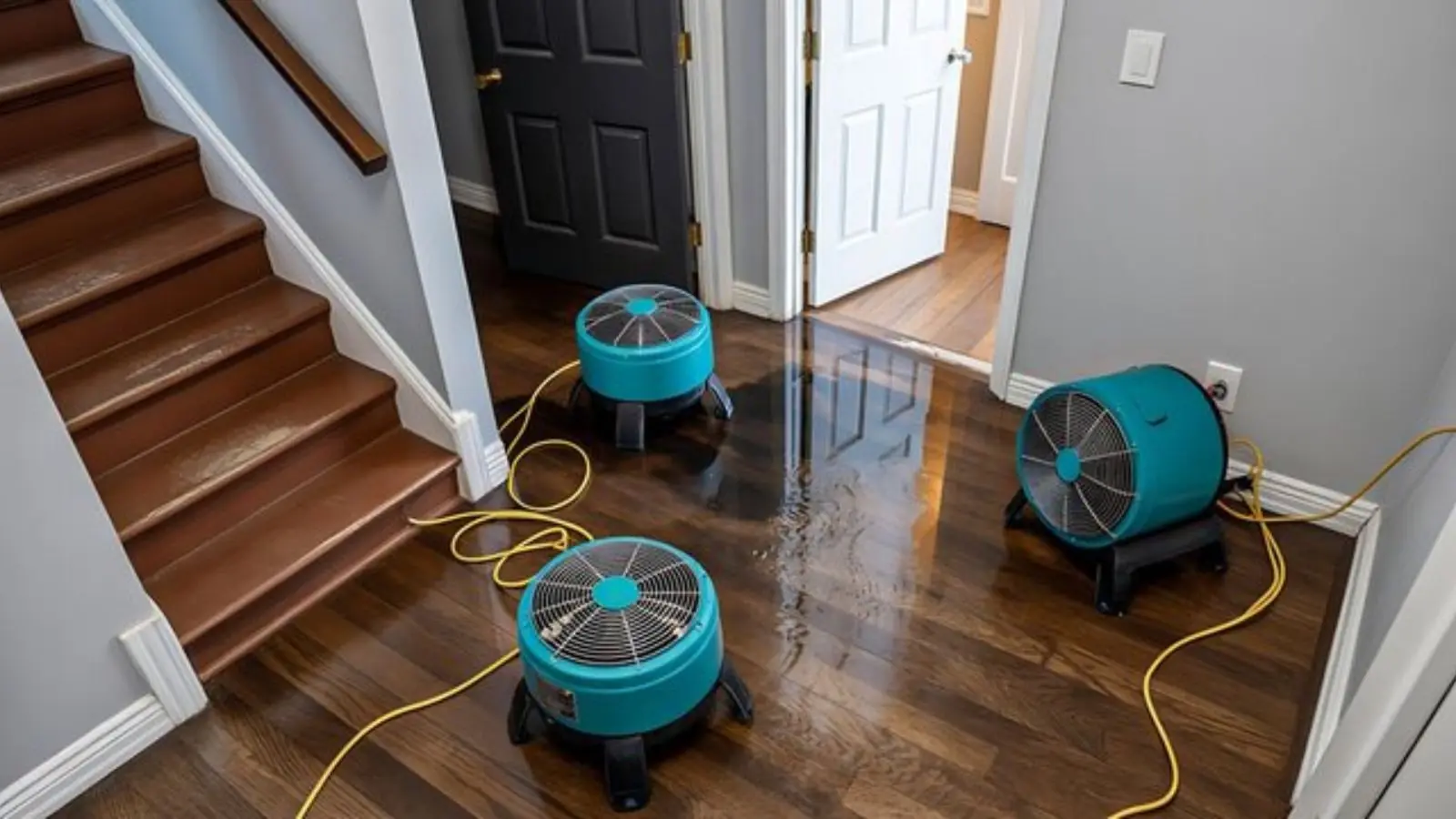
Stopping the damage in the first 72 hours
If water is spreading through your Hyattsville home right now, call (301) 936-0619. The line is open 24/7, and the crew sets priorities by how fast the water is moving. Water mitigation is the work of limiting a water loss: shutting off the source, removing standing water, setting drying equipment and tracking moisture until the structure is dry.
Mitigation is not the rebuild. Its job is to keep a bad day from becoming a bigger repair bill, because water wicks up drywall, soaks into subfloors and gets into wall cavities within hours. Once the building is dry, water damage repair deals with whatever could not be saved.
While you wait for the crew, the next sections cover what is safe to do yourself and what is not.
Wet carpet, a musty smell after a leak, a ceiling stain that keeps spreading
Those are the ways most people describe a wet building before they know what it is called. The trade term for fixing it is water mitigation, and it means stopping the water, pulling it out and drying the structure with measured equipment. A damp smell or a widening stain usually means moisture is still sitting somewhere you cannot see.
Water is spreading right now: do this while you wait
Acting early limits the damage, and the steps are simple. Stay safe first and save belongings second.
Safe steps before the crew arrives
- Stop the source if you can reach it safely: close the fixture valve, or shut off the main water valve for the house.
- Keep people and pets out of any water that may be contaminated, including anything from a sewer line or toilet.
- Lift furniture legs onto foil or blocks, and move rugs, electronics and papers to a dry room.
- Turn off power to wet areas only if the panel is dry and you can reach it without stepping in water. Otherwise call your electric utility.
- Take photos and video of the water, the source and every affected room before anything is moved.
- Open windows only if outdoor air is dry. In humid weather, closed doors and windows help the dehumidifiers work later.
- Call the line. A same-day response is possible when crews are available, including after hours and on weekends.
Wet outlets, gas smell or sewage: stay out first
Call the utility or 911 before you call the line
If water touches an electrical panel, outlet or cord, stay out of the room. Cut power only if the panel is dry and safe to reach, and call your electric utility or 911 for any electrical risk.
If you smell gas, leave the building and call 911 and the gas company from outside. Washington Gas lists its leak line as 844-WASHGAS (844-927-4427), option 1.
For a water main break or a sewer backup into the home, WSSC Water's 24-hour emergency line is 301-206-4002. Sewage is contaminated water, so keep everyone out of it.
Water still spreading?
Call (301) 936-0619 any hour. Same-day response when available.
The first 72 hours, stage by stage
Drying runs on a clock. This table shows what the water is doing in each window and what a mitigation crew does about it.
| Window | What is happening | What the crew does |
|---|---|---|
| First 24 hours | Water is still moving into carpet, pad, drywall and framing. Porous materials soak quickly. | Confirms the source is stopped, runs extraction units, pulls wet pad or soaked materials as needed, maps moisture with meters and thermal imaging, and sets air movers. |
| 24 to 48 hours | Surface water is gone but moisture is still inside walls and subfloors. This is the window the EPA gives for drying water-damaged areas and items to prevent mold growth. | Adds LGR dehumidifiers, adjusts air mover placement, opens wall bays or drills small holes where readings stay high. |
| 48 to 72 hours | Wet spots that were missed start to show, and humid air can slow the last stretch. | Rechecks every mapped point, moves or removes equipment from areas that reached their goal and keeps drying where readings are still high. |
Heavy damage can run past 72 hours. The crew stops when the readings say stop, not when a day count runs out.
Structural drying: equipment, readings and drying goals
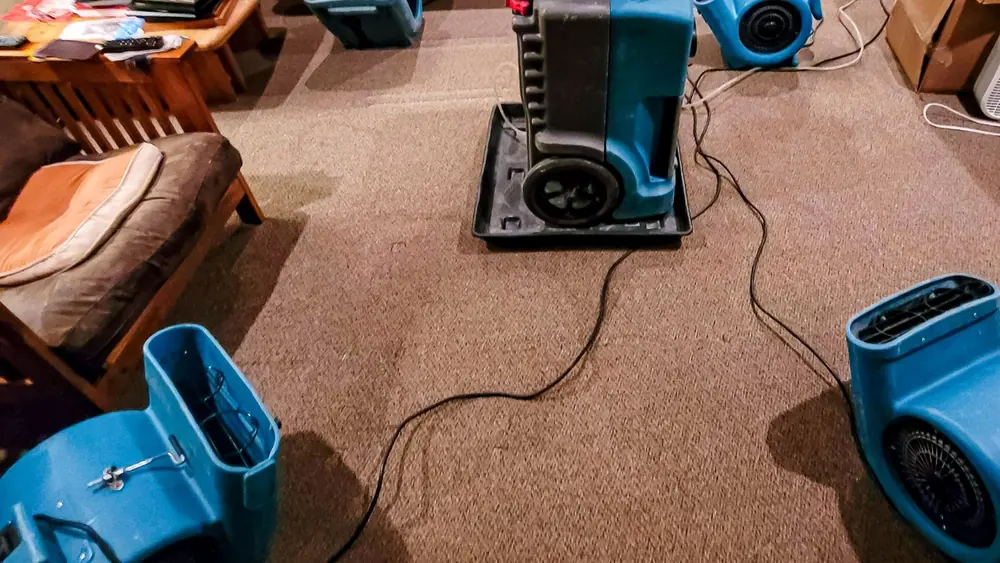
Structural drying removes moisture from the building itself, not just the floor surface. Air movers push dry air across wet surfaces. LGR dehumidifiers, which are low grain refrigerant units, pull that moisture out of the air so it does not settle back into the walls. Extraction units remove bulk water first, because it is faster to vacuum a puddle than to evaporate it.
Measurement guides all of it. Moisture meters read wood, drywall and concrete, and thermal imaging cameras show cool wet zones behind finished surfaces. A drying goal is set by comparing readings in the wet area against readings from a dry reference spot in the same building. Crews log the numbers each visit, which shows whether the drying is working.
Hyattsville's summers push against this work. The nearest long-term NOAA station, Reagan National Airport, shows a July mean of 81.0 F, and that warm, humid air carries moisture that slows drying. Dehumidifiers matter more in July than in January, whose mean is 37.5 F. The EPA's 24 to 48 hour guidance is the target, and a wet home in August needs a closed, dehumidified space to meet it.
The ANSI/IICRC S500 standard is the published reference for professional water damage restoration. Ask any company whether its crews work to it.
What changes the size of a mitigation job
Clean-water leak, one room
Scope: smallA supply line or appliance leak caught quickly, with extraction and a few air movers.
Leak that reached the next room
Scope: moderateWater crossed a doorway or soaked the ceiling below, so more rooms need mapping and drying.
Wet walls and subfloor
Scope: largerWater got into wall cavities and under flooring, which means more equipment and more drying days.
Multi-level loss
Scope: extensiveWater ran through a floor system into the level below, with wet ceilings, walls and flooring on both.
Contaminated water
Scope: majorSewage or floodwater changes the water category and what must be removed before drying begins.
Price is explained before work starts and depends on water category, affected area, materials, drying days and equipment.
Insurance and mitigation records
Keep moisture logs and photos
Sudden and accidental water damage is often covered, and a gradual leak often is not. Flood damage is usually excluded unless you carry separate flood coverage, and sewer backup often needs an endorsement. Check your policy or ask your insurer before you assume either way.
The drying logs, readings and photos from a mitigation job are the paper trail your insurer may ask to see. Ask the crew for copies when the job closes.
Mitigation across Hyattsville and the towns next door
Hyattsville's older housing and storm-drain system shape the calls. The city's own stormwater study says much of the storm drain system dates from 1960 to 1990 and that 41st Street has standing water during and after intense rain. A clogged inlet can push water into a basement even without a river overflowing, so see emergency water removal when the problem is standing water that needs pumping out.
If the water was sewage or came from outside, that is a different category of work. The water damage cleanup page explains what comes out and why, and mold remediation applies if growth shows up later. Restoration crews also work in Brentwood and other nearby towns. After-hours calls get the same priority questions as daytime calls.
Water mitigation questions from Hyattsville callers
Yes. The line is staffed around the clock, and a night or weekend call gets the same questions as a daytime call: where the water is coming from, how far it has spread and whether anyone is in danger. A same-day response is available when crews are free, and no arrival time is promised.
Stop the water source, move belongings out of the wet area and call the line. A musty smell means moisture is still in the carpet, pad or wall behind it. The fix is water mitigation: extraction and drying equipment, not air freshener.
Crews use air movers, LGR dehumidifiers, extraction units, moisture meters and thermal imaging cameras. Drying time depends on materials and how deep the water went, and it is judged by readings. The EPA gives 24 to 48 hours as the window to dry water-damaged areas and items, and heavier losses can take longer.
No. This line dispatches restoration crews and does not rent out equipment. Fans placed without moisture readings often miss wet cavities, which is why mapping comes first.
No. Mitigation stops the spread and dries the building. Repair rebuilds drywall, flooring and finishes afterward, once readings confirm everything is dry.
Yes, but sewage is contaminated and must be handled differently. Stay out of the water and call WSSC Water's emergency line at 301-206-4002. The sewage backup rules for who fixes which pipe depend on where the blockage sits.