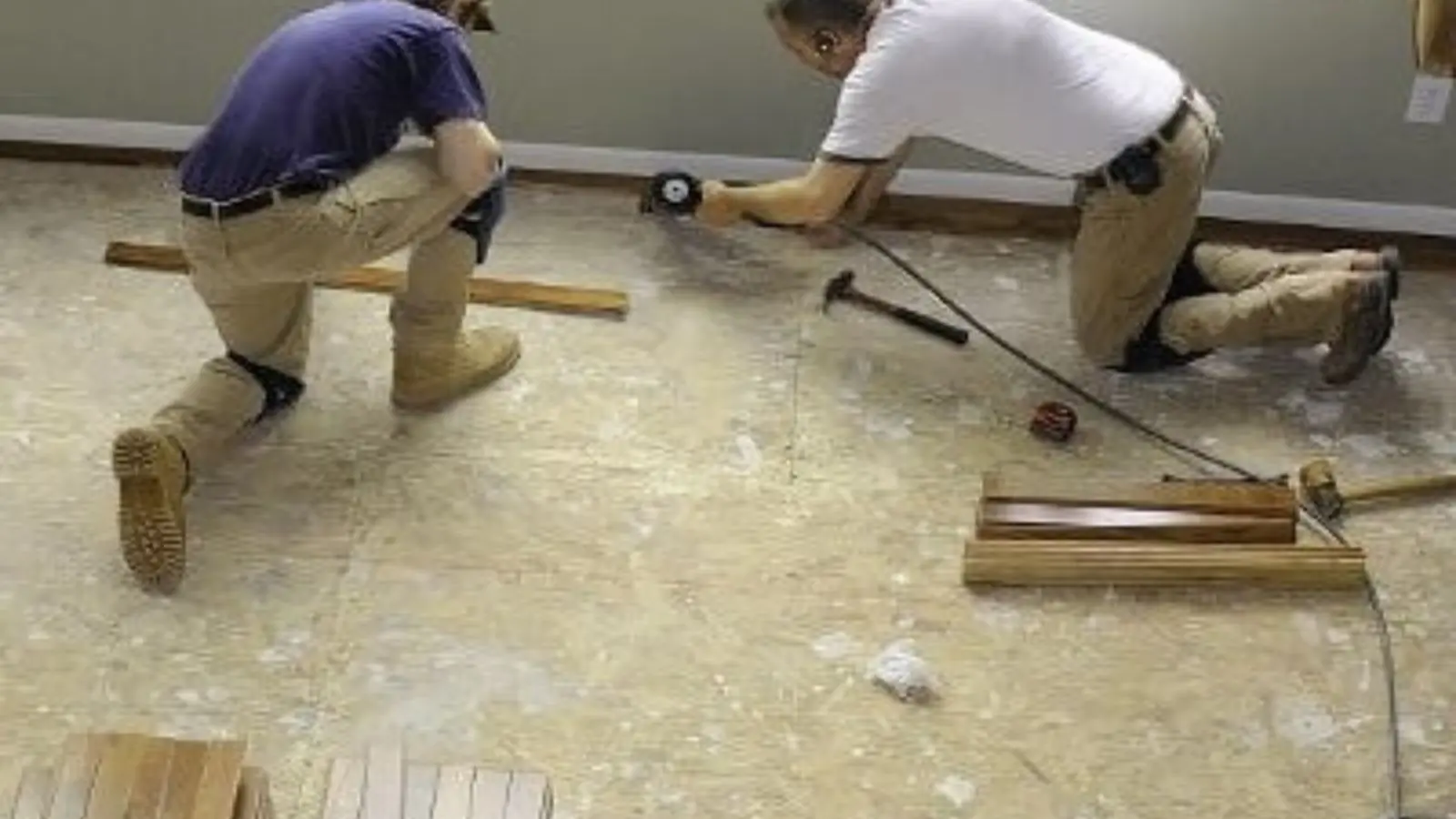
Rebuilding starts after the drying is finished
Water damage repair in Hyattsville, MD means rebuilding what the water ruined: drywall, insulation, flooring, paint, cabinets and trim. It is the last phase of a restoration job, not the first. Repair begins only once drying readings show the structure is dry, because a closed wall that is still wet keeps the moisture inside.
If water is still on the floor or walls are still damp, you need water mitigation first. Materials that cannot be saved are removed during water damage cleanup, which comes before any rebuilding. The homepage covers the whole job from first call to finished room, and this page picks up at the point where the walls are open and dry.
Moisture meters give the go-ahead. A crew compares readings in the wet area against readings from an unaffected wall in the same building, and the rebuild waits until the numbers line up. The EPA advises drying water-damaged areas and items within 24 to 48 hours to prevent mold growth, so repair crews should be working in a dry building.
Repair or replace: a material-by-material guide
A rebuild turns on one question asked many times: can this material be saved, or does it come out? The table shows how that call is usually made.
| Damaged material | Repair or replace | Why |
|---|---|---|
| Drywall ceiling panel that sagged or stained | Replace the affected panel | Wet gypsum loses strength and can drop, and a stain painted over can bleed through again. |
| Drywall with a small wet patch, now dry and firm | Repair | A patch, tape, joint compound and primer can blend in once the readings are dry. |
| Fiberglass insulation in a soaked wall cavity | Replace | It mats down and holds water against the framing instead of drying in place. |
| Solid hardwood with mild cupping | Dry first, then often sand and refinish | Boards can flatten as moisture leaves, so the decision waits for stable readings. |
| Hardwood that lifted, rotted or stained badly | Replace | Boards in that condition rarely lie flat again, and the subfloor underneath needs a look. |
| Laminate or engineered flooring with swollen edges | Replace the affected planks | The core swells and does not shrink back to its original size. |
| Particleboard cabinet base | Replace | Particleboard swells at the bottom edge once it soaks. |
| Plywood or solid wood cabinet box | Often dry and keep | These materials tolerate drying better, though doors and toe kicks may still need work. |
| Painted baseboard and trim | Remove, dry, then reinstall or replace | Sound wood trim can be pulled so the wall behind it dries, then put back. |
A written scope lists these calls room by room.
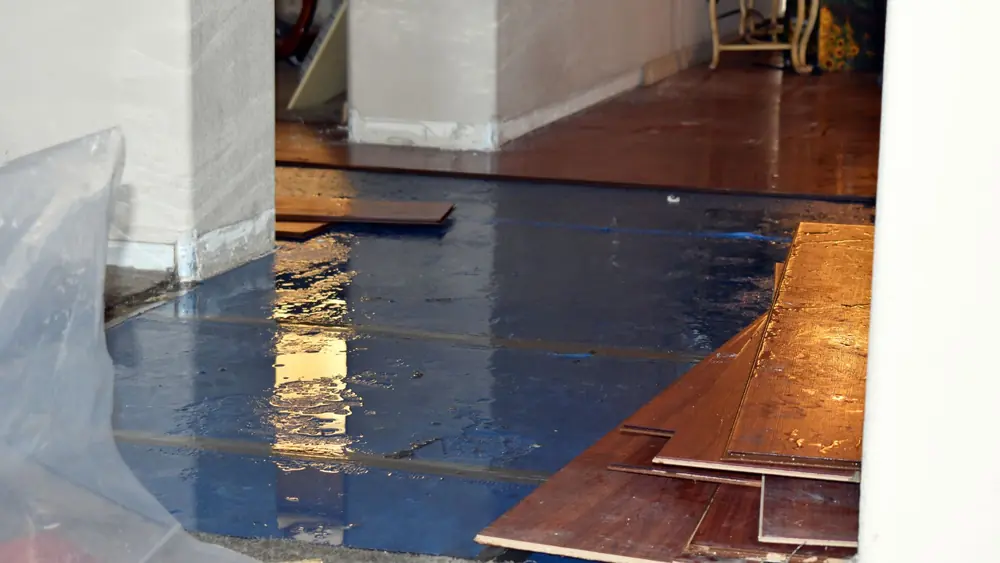
Fixing a stained, sagging or fallen ceiling
Ceiling damage usually has one of a few causes. A roof leak soaks the attic insulation and the board below it. A condensation line from an air handler backs up and drips for days. A washer valve breaks upstairs and water runs down through the floor cavity. Sometimes the ceiling comes down.
The repair sequence is steady. The crew cuts out wet or sagging drywall, usually a little past the visible edge so the new board meets dry, firm material. They check the joists and insulation above, confirm dryness with a meter, then hang new board, tape the seams, apply joint compound, sand, prime and paint. A stain-blocking primer is used so the old water mark does not ghost through the finish.
Fix the source first. A new ceiling under a leaking roof gets wet again, and restoration work is not roofing, so a roofer should repair the roof before the board goes up. A plumber or HVAC technician should fix a failed supply line or clogged condensate drain.
Walls follow the same pattern, with one extra step. Wall cavities hide wiring and old pipe, so any outlet that got wet should be checked by an electrician before it is covered. If you smell mustiness or see growth in the opened cavity, mold remediation is a separate job that follows its own standard and comes before closing the wall.
Ready to scope the rebuild?
Call (301) 936-0619 and describe the damage. Scope and price are explained before work starts.
Hardwood cupping: dry it, wait, then decide
Cupping happens when the underside of a hardwood board absorbs water faster than the top. The edges rise and the middle sinks, so the board looks like a shallow trough.
The drying comes first. Air movers and dehumidifiers pull moisture out of the boards, and drying mats or panels can be used on a floor that is too valuable to pull up. A moisture meter checks both the wood and the subfloor, because a dry-looking surface can sit on a damp base.
Repair versus replacement depends on what the boards do as they dry. If they flatten, sanding and refinishing is often enough. If they stay crowned, split at the seams or lifted from the subfloor, replacement is the honest answer. Sanding too early is a common mistake. It levels a board that is still wet, and when the board finally dries the edges shrink and leave a crowned, gapped surface.
How the written scope and price are built
Scope and price are explained before work starts. No figure can be given for a house before someone sees it, but the method is the same every time.
- 1
Walkthrough
A technician walks every affected room and the rooms next to them, noting ceilings, walls, floors, cabinets and trim, and photographs what is visible.
- 2
Readings
Moisture meters and thermal imaging cameras confirm what is dry and what is not, so the scope rests on measurements and not on guesses.
- 3
Line-by-line scope
Each item gets a row: the material, the action (patch, replace, refinish), the area involved and the finish expected. A reader can check it against the table above.
- 4
Price review
Pricing is explained against that scope before any wall is closed. You can ask why a row is there, or what would change it.
- 5
Changes
If opening a wall reveals something new, such as rotted framing, the scope is updated in writing before extra work begins.
What makes a rebuild smaller or larger
One patch, one room
Scope: smallA dried wall section or ceiling patch with paint, no flooring or cabinet work.
One finished room
Scope: moderateDrywall, trim and paint across a room, or a hardwood section refinished after cupping.
Room with floors and cabinets
Scope: largerNew flooring, cabinet bases, insulation and drywall in a kitchen or bathroom.
Several rooms or two floors
Scope: extensiveCeiling replacement below a leak plus wall and floor work on more than one level.
Structural work found after opening
Scope: majorDamaged framing, subfloor or old plumbing that has to be corrected before finishes go back.
Size depends on affected area, materials, how long the area stayed wet and how much finish work the room needs.
Insurance and who pays for the rebuild
Check your policy before you order the rebuild
Sudden and accidental water damage is often covered by a homeowners policy, while a slow leak or neglected maintenance often is not. Flood damage is usually excluded and needs separate flood coverage. The Maryland Insurance Administration says sewer or water backup is an optional endorsement that insurers must offer.
Renters should know that a renters policy covers belongings, not the building. Read your policy, photograph everything before work begins and ask your insurer what documentation it wants.
Older buildings and rented homes in Hyattsville
The City of Hyattsville was incorporated in 1886, and the Hyattsville Historic District, listed on the National Register in 1982, contains nearly 1,000 buildings according to the city's history page. Older buildings mean older supply lines, drains and wall cavities. When a repair opens a wall, that is the moment to have a plumber look at the pipe inside before new drywall closes it in.
Census QuickFacts puts the owner-occupied rate at 48.4 percent, so about half of Hyattsville households rent. In a rented unit, the lease and the landlord decide who orders the rebuild. Tell the landlord in writing and keep your photos.
Permit rules vary by the work, so ask Prince George's DPIE or the city before rebuilding walls, electrical or plumbing. The city's stormwater study also mentions a levee system shared with Riverdale Park, and crews cover Riverdale Park along with Hyattsville and other nearby towns.
Water damage repair questions from Hyattsville homes
Repair can start once moisture meter readings in the affected walls, floors and framing match the readings from an unaffected area of the building. Ask for those readings in writing. If the building is still wet, the right next step is drying, not new drywall.
Paint alone hides the stain and does nothing about the cause. Find and fix the leak, make sure the board is dry and firm, then use a stain-blocking primer before painting. If the board is soft, sagging or crumbling, it should be replaced.
No. Mild cupping often relaxes as the boards dry, and sanding and refinishing can finish the job. Boards that stay crowned, split or lift from the subfloor are usually replaced. The decision should wait for stable moisture readings.
It depends on your lease and the cause of the damage. A renters policy covers your belongings, not the building, according to the Maryland Insurance Administration. Report the damage to your landlord in writing and keep photos of every room.
Permit rules vary by the work. The city says most construction work needs a permit from Prince George's DPIE, so ask DPIE or the city before rebuilding walls, electrical or plumbing.
Not by itself. Restoration repairs damage after water gets in, and it is not waterproofing. If water came through a wall or floor in a downpour, a waterproofing or drainage contractor needs to address the entry point. A clogged inlet or failed sump pump is worth checking first.