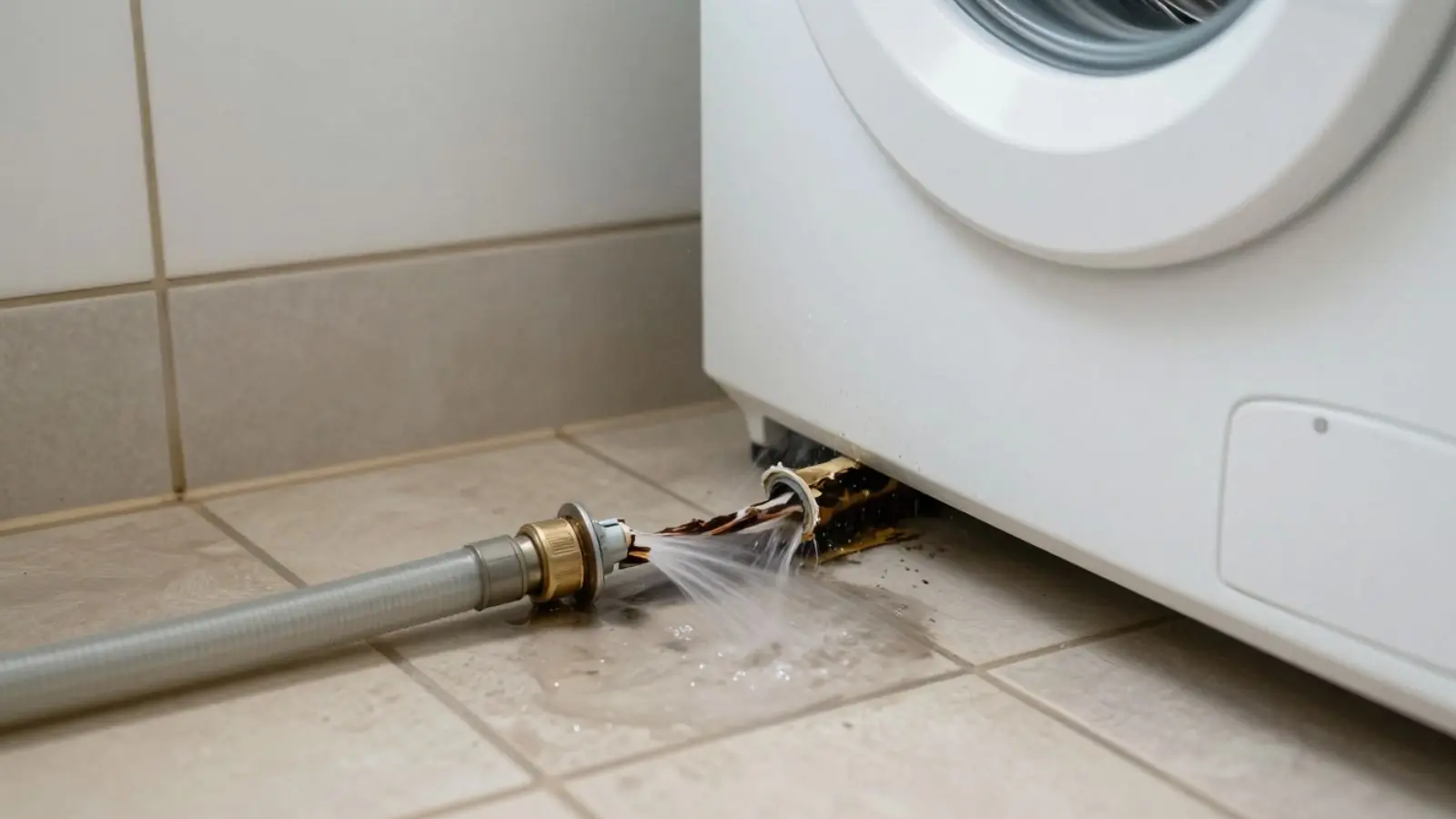
How a Small Appliance Leak Becomes Water Damage
Appliance leak water damage is moisture left in floors, walls and cabinets after a washing machine, dishwasher or refrigerator releases water. The leak itself may be a cup a day or a hose that lets go all at once. Either way, the water rarely stays where you can see it.
Appliances sit against walls and on top of subfloor, so water slides under the unit, along the baseboard and into the cavity behind it. A washer hose that fails on a Friday can run all weekend. By Monday the laundry room floor is warped and the ceiling below is stained.
This page covers water that comes from the machine. If the damage is mostly in cabinets and counters, the kitchen as a room has its own page on this site.
Signs the Leak Is Bigger Than the Puddle
Use the table to match what you see to what is likely happening underneath.
| What you see | Likely source | First move |
|---|---|---|
| Wet floor in front of a front-loading washer | Door gasket, drain hose or pump | Stop the cycle, unplug if the outlet is dry, towel up the water |
| Water pooling behind or beside a top-loading washer | Inlet hose, valve or drain standpipe overflow | Close the two supply valves, then check the hoses |
| Dishwasher leaking at the door or onto the floor | Door seal, float switch or drain line | Turn off its breaker if safe, close the supply valve under the sink |
| Puddle under a refrigerator or ice maker | Ice maker line, water filter or drain pan | Pull the plug if the outlet is dry, close the line valve, check the floor under it |
| Stain on the ceiling below a laundry room | Long-running supply or drain leak above | Call the line, document it, tell your landlord |
First-Hour Safety Steps
Water, outlets and heavy machines
Appliances run on electricity, and the outlets are usually low on the wall. Treat any wet outlet as live.
- Unplug the appliance only if the outlet is dry and you are not standing in water. If the outlet is wet, stay out and call 911 and your electric utility.
- Close the supply valves behind the washer or under the sink. If a valve is stuck, shut the main water valve for the house.
- Do not tilt or drag a full washer or refrigerator. They are heavy and can pin a hand or crack a floor.
- If you smell gas near a gas dryer or range, leave and call 911 and Washington Gas from outside. The Washington Gas leak line is 844-WASHGAS, option 1.
Where the Water Goes Under and Behind Machines
Each appliance leaks differently, and the hiding spots differ with it.
Washing machine
Rubber supply hoses and the drain standpipe are common weak points. Water runs under the machine, through the subfloor seam and into the ceiling or room below.
Dishwasher
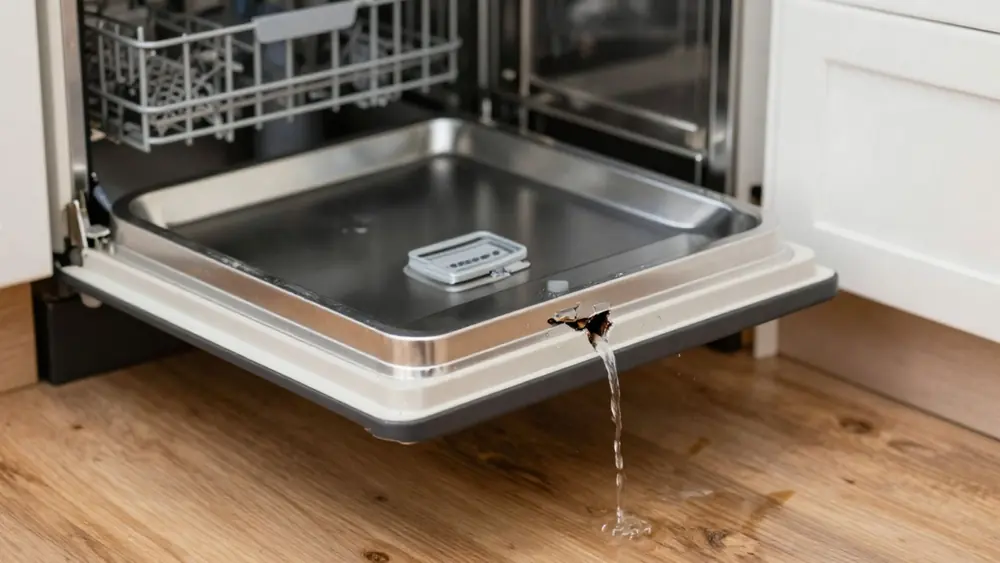
A slow door seal leak soaks the cabinet base next to it and the subfloor beneath. Toe kicks and adjacent cabinet bottoms often swell before the floor shows damage.
Refrigerator ice maker line
The thin supply line behind the unit can drip for weeks. Water collects under the fridge, where no one looks, and can reach hardwood or vinyl planks.
Upstairs units
In a multi-story building, a leaking laundry closet can wet the ceiling, wall cavities and light fixtures in the unit below.
Leak behind the washer?
Call the line and describe what you see. A dispatcher will explain the next step.
Upstairs Neighbors, Landlords and Renters
The Census Bureau's QuickFacts lists the Hyattsville owner-occupied rate at 48.4 percent for 2020 to 2024, which means roughly half of households rent. That makes an upstairs appliance leak a real local case. The source of the water may be in a neighbor's unit while you are the one with the stained ceiling.
Document the damage with photos and dates, and tell your landlord or property manager in writing. The Maryland Insurance Administration notes that renters policies cover your belongings, not the building, so your own policy usually handles your furniture and electronics while the structure is the landlord's matter. Call the line for drying in the wet areas you can access.
How Hidden Water Gets Dried
- 1
Stop and extract
After the source is closed, wet vacuums and extraction units pull standing water from the floor.
- 2
Map the moisture
A moisture meter checks the subfloor, baseboards and drywall. A thermal imaging camera shows cooler wet zones behind walls and under the machine's footprint.
- 3
Open what holds water
Toe kick strips, a baseboard or a small drywall section may come off so air can reach the cavity.
- 4
Dry with air movers and dehumidifiers
Air movers push air across surfaces while LGR dehumidifiers pull moisture from the room. Readings are checked daily until the materials return to dry reference points under the S500 standard.
What Changes the Scope of an Appliance Leak
Caught within hours
Scope: one areaA short leak onto sealed tile, extracted and dried in place.
Overnight run
Scope: one roomWater in baseboards and the subfloor, with wet cabinet bases nearby.
Leak ran for days
Scope: room plus cavityFlooring has warped and drywall is soft, so more material comes out.
Upstairs unit leak
Scope: two levelsCeilings below, wall cavities and light fixtures are affected, which adds time and coordination.
Water category, duration, flooring type, access and drying days set the price. Scope and price are explained before work starts.
Does Insurance Cover an Appliance Leak?
The Maryland Insurance Administration says most homeowners policies do not cover damage from a slow leak. A hose that bursts and floods a laundry room is sudden. A seal that dripped for months is gradual, and the two can be treated very differently. The MIA also says many policies will not pay for repair of the failed part itself, so the damage is what a claim may address, not the new hose.
Maryland's COMAR 31.15.07.03 lists failing to acknowledge a claim notification within 15 working days as an unfair practice, with exceptions. Report promptly, keep the failed hose or part, and take photos before the cleanup starts. Your policy decides what is covered, so read it or ask your insurer.
Mistakes to Avoid and Easy Prevention
- Do not push the washer back against the wall until the area behind it is checked and dry.
- Do not ignore a musty smell near a laundry closet. The EPA says to dry water-damaged areas within 24 to 48 hours to prevent mold growth, and that mold will not grow without moisture.
- Replace old rubber washer hoses before they fail, and close the supply valves when you go away for several days.
- Pull the refrigerator out once a year and look at the ice maker line and the floor under the unit.
- Do not run a dishwasher that is visibly leaking, even for a short cycle.
Related Services and Nearby Towns
When the drying is done and flooring or drywall has to be replaced, water damage repair covers that rebuild stage. If water reached more than the floor, water damage cleanup explains how affected materials are removed. A tank failure is a separate event, covered on the water heater leak cleanup page.
Crews serve Riverdale Park and Brentwood as well, where many apartment buildings sit near Route 1 and the same upstairs leak questions come up.
Frequently asked questions
The (301) 936-0619 line is staffed 24/7, and crews respond the same day when available. No arrival time is promised on the call. While you wait, close the supply valves and keep power off wet outlets.
A moisture meter and a thermal imaging camera can read floors and walls even when the surface looks dry. Crews check the subfloor and the wall behind the machine, not just the visible puddle.
Take dated photos, tell your landlord in writing and call the line about drying the ceiling and any wall cavity. Who pays is a lease and insurance question, so ask your landlord and your insurer.
No. A plumber or appliance technician repairs the unit and its connections. The line covers water extraction and drying of the building.
It depends on the material, how long it was wet and how much water got into the subfloor. Drying is monitored daily, and the crew ends equipment use when readings return to dry reference points.