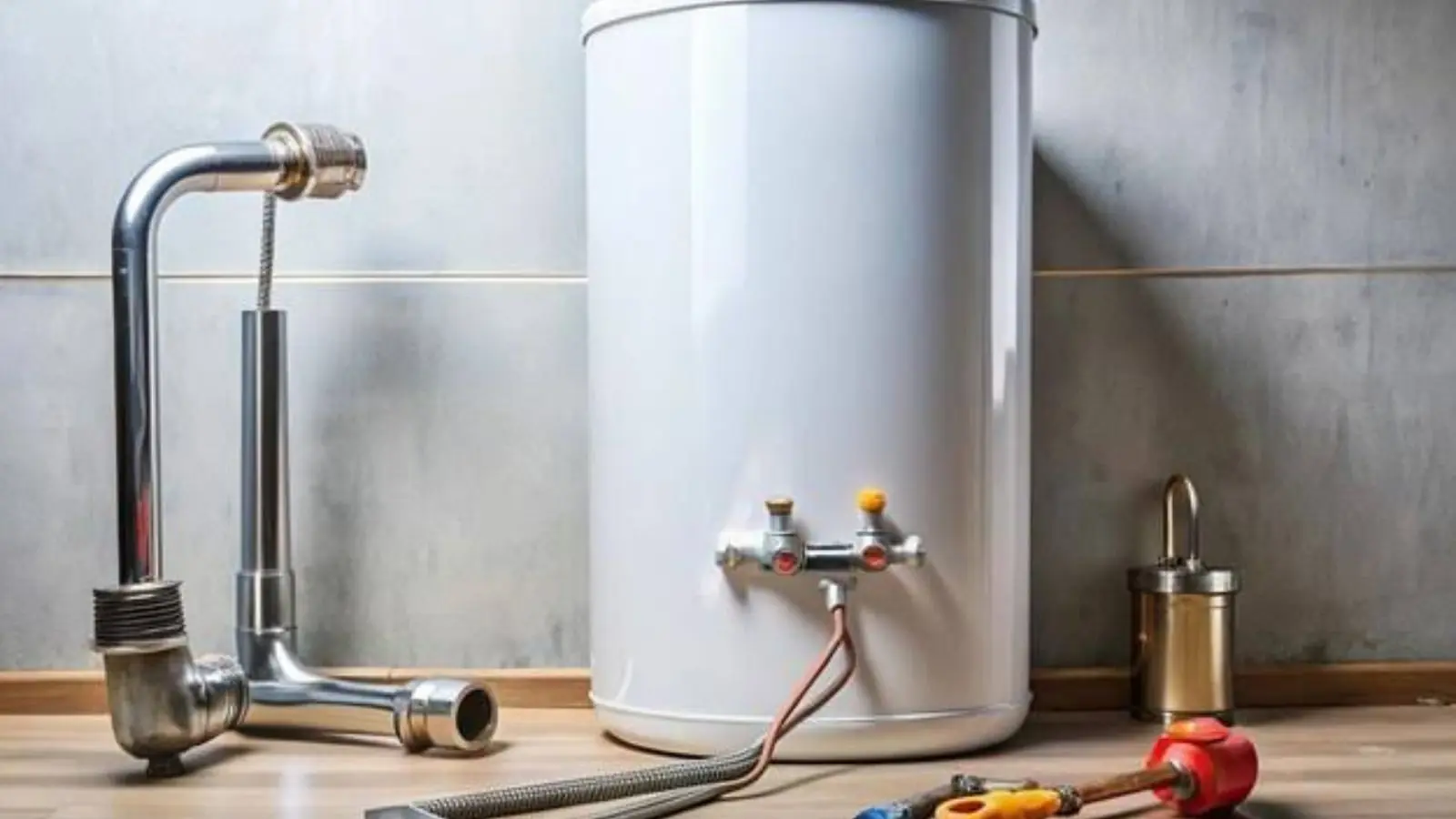
Water Heater Leaking Right Now
Water heater leak cleanup is the removal of spilled water and the drying of every surface it reached after a tank, valve or fitting fails. If your heater is leaking right now, the (301) 936-0619 line answers 24/7, and crews respond the same day when available. No arrival time is promised on the call.
While you wait, close the cold water supply valve on the pipe feeding the heater. If the valve is stuck or underwater, shut the main water valve for the house instead. Lift boxes, rugs and electronics off the floor, and keep children and pets away from the puddle, because water from the tank can be hot.
A heater rarely leaks in a place that is easy to see. Many sit in basements, utility closets and corners behind a furnace door, so water often runs under walls and flooring before anyone notices. By then the job is no longer a mop-up. It is a drying job.
Water Heater Safety Before Anything Else
Gas, power and hot water come first
A heater can be a gas appliance or an electric one, and each has its own danger. Decide which you have before you touch anything, then follow the matching rule below.
- If you smell gas, leave the building and call 911 and Washington Gas from outside. The Washington Gas leak line is 844-WASHGAS, option 1. Do not flip switches or use a lighter on the way out.
- For an electric heater, turn off its breaker only if the panel is dry and you can reach it without stepping in water. If water is touching the panel, outlets or the heater wiring, stay out and call 911 and your electric utility before you call the line.
- Do not reach into hot standing water or touch a hot relief valve pipe. Water that has been inside the tank can scald.
- Do not relight a gas pilot or restart a unit that has been wet. A licensed plumber should check it first.
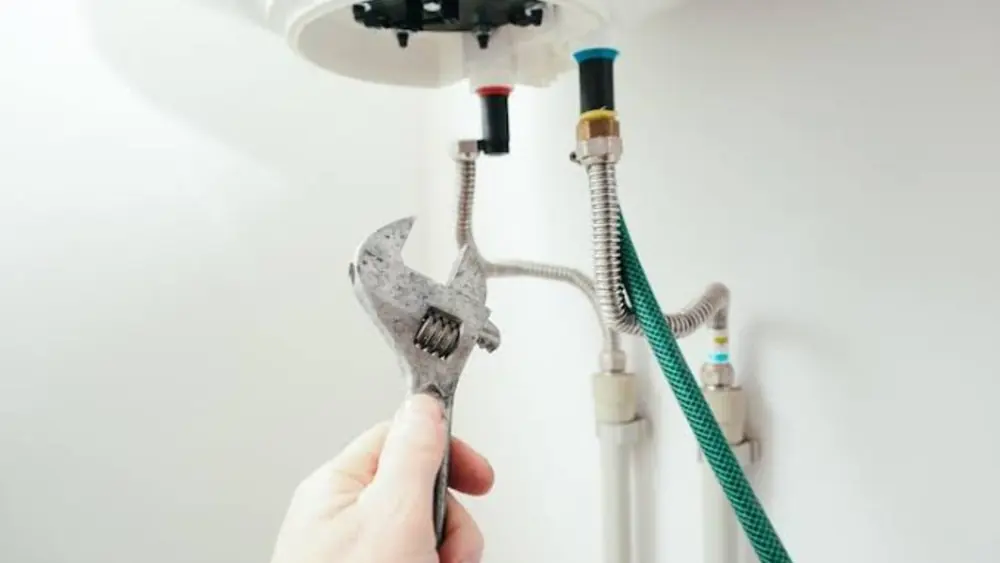
Why Tanks Leak and Valves Discharge
Most water heater floods trace back to one of a few causes. Knowing which one you have helps the plumber and helps when you talk to your insurer.
Tank corrosion
Steel tanks rust from the inside over time, and the leak often starts at a seam or the bottom. A tank that has split cannot be repaired. It has to be replaced.
Sediment and age
Minerals settle at the bottom of the tank and bake into a crust. The crust traps heat, stresses the steel and can speed up failure. An old tank that was never flushed is the usual suspect.
Pressure relief valve discharge
The temperature and pressure relief valve opens to let out water or steam when pressure builds. A pipe usually carries that water to a drain or to the floor. A valve that drips often points to high pressure or a worn valve.
Loose fittings and drain valve
Supply connections, the drain valve at the base and the anode rod port can all weep. These are slower leaks, and they can soak a subfloor for weeks.
The city says the Hyattsville Historic District holds nearly 1,000 buildings, and the National Register entry says the town grew mainly after the 1870s. Houses of that age often have heaters tucked into basements with old floor drains, mixed pipe materials and brick or block walls that hold moisture. A leak in one of those rooms can wick into wall bases and stair stringers.
Apartment buildings add another twist. The Census Bureau's QuickFacts puts the owner-occupied rate in Hyattsville at 48.4 percent for 2020 to 2024, so about half of households rent. Many renters share a utility closet or sit above one, and water from a tank can reach the unit below. If the heater is not in your unit, tell your landlord right away and call the line for the wet areas you can reach.
Replacing the heater is a separate job from the cleanup. Permit rules vary by the work, so ask Prince George's DPIE or the city before you replace a tank or touch gas or electrical lines.
Heater leaking right now?
Call the 24/7 line and a dispatcher will walk you through the shutoff steps.
What You See and What It Means
Match the sign to the likely cause, then take the first move.
| What you see | What it usually means | First move |
|---|---|---|
| Water spreading from the base of the tank | Tank has failed, often from corrosion | Close the cold supply valve, cut power to the unit if safe, call the line |
| Steady drip from a pipe on the side or top | Relief valve discharging, possibly from high pressure | Do not cap the pipe, call a licensed plumber, mop up and call if the floor is wet |
| Damp spot at the drain valve or a fitting | Slow leak from a worn part | Place a pan, mark the wet area, schedule a plumber and a moisture check |
| Rust-colored water or a rotten egg smell with leaks | Aging tank and sediment | Have the unit inspected before it fails fully |
| Gas smell near the heater | Possible gas leak | Leave, call 911 and Washington Gas from outside |
How the Cleanup Works
- 1
The call
The dispatcher asks what kind of heater it is, where it sits and how far the water has run.
- 2
Extraction
Crews pull standing water with wet vacuums and portable extraction units, then lift soaked carpet and pad if present.
- 3
Moisture mapping
A moisture meter and a thermal imaging camera show how far water traveled into drywall, baseboards and subfloor.
- 4
Drying
Air movers and LGR dehumidifiers run until readings match dry reference points. The ANSI/IICRC S500 standard is the published guide for this work, so ask any company whether its crews follow it.
- 5
Scope and price explained
Scope and price are explained before work starts, including what can dry in place and what has to come out.
What Changes the Size of the Job
Valve drip caught the same day
Scope: one closetA small clean-water release onto a sealed floor, extracted and dried quickly.
Tank failure in a utility room
Scope: one roomA full tank released onto vinyl or concrete, with wet baseboards and drywall edges.
Leak into a finished basement
Scope: lower levelWater reaches carpet, pad and wall bases, so more drying equipment runs for more days.
Slow leak that ran for weeks
Scope: structureSubfloor and framing are soaked, and mold may be present. Mold work follows its own standard, S520.
Water category, area wet, flooring type, drying days and rebuild scope set the price. Nothing is quoted without seeing the loss.
Water Heater Leaks and Your Policy
The Maryland Insurance Administration says most homeowners policies will not cover damage that results from a slow leak. A tank that bursts in one event is a different story from a valve that wept for months.
The difference often matters. The MIA also says many policies will not pay to repair or replace the pipe or drain itself, and a failed tank may be treated the same way. Check your policy for how it handles the unit and the damage.
Timing matters too. Maryland's unfair claim settlement rule, COMAR 31.15.07.03, lists failing to acknowledge a claim notice within 15 working days as an unfair practice, with exceptions. Report the loss promptly and take photos before cleanup.
Keep the wet materials the crew removes until you are told you can discard them. Renters should know that a renters policy covers belongings, not the building, so the landlord's coverage handles the structure.
Mistakes to Avoid and Prevention
A few small habits cut the odds of a repeat and make a leak easier to catch.
- Do not plug or cap a relief valve discharge pipe. The valve is a safety device, and it needs a clear path to release pressure.
- Do not leave wet drywall behind a heater closet. The EPA says to dry water-damaged areas within 24 to 48 hours to prevent mold growth.
- Look at the base of the tank and the floor around it every few months, and put a drain pan with a leak sensor under heaters that sit above finished space.
- Ask a licensed plumber about flushing the tank and checking the relief valve, especially on an older unit.
- Know where the cold supply valve is before you need it, and clear the path to it.
Nearby Towns and Related Services
Crews serve Hyattsville and the towns around it. Homes in College Park and Mount Rainier often have basement utility rooms of similar age, and the same steps apply there.
If the heater water ran into walls, water mitigation covers the drying phase in detail. When the flooring and drywall have to be rebuilt afterward, that work falls under water damage repair. A leak from a washer or dishwasher is a different source, covered on the appliance leak page.
Frequently asked questions
Yes. The (301) 936-0619 line answers 24/7, including nights and weekends, and crews respond the same day when available. No arrival time is promised on the call, but the dispatcher will tell you what to do while you wait.
Shut the cold supply valve first, since that stops new water from entering the tank. For an electric unit, cut the breaker only if the panel is dry and reachable. For a gas unit that smells of gas, leave and call 911 and Washington Gas from outside.
Usually it starts as clean supply water, which the S500 standard calls Category 1. Left sitting on porous materials for a day or more, it can degrade. Carpet pad and drywall that stayed wet for long are treated more cautiously.
A licensed plumber repairs or replaces the unit. The line handles the water damage, meaning extraction, drying and the list of materials that need to come out. Ask Prince George's DPIE or the city about permits for the replacement.
Water travels down through floors and walls, so the work often includes the unit below. Notify your landlord and take photos of every wet surface. Crews dry cavities between floors with air movers and check ceilings below with a thermal imaging camera.