When a Frozen Pipe Splits and Then Thaws
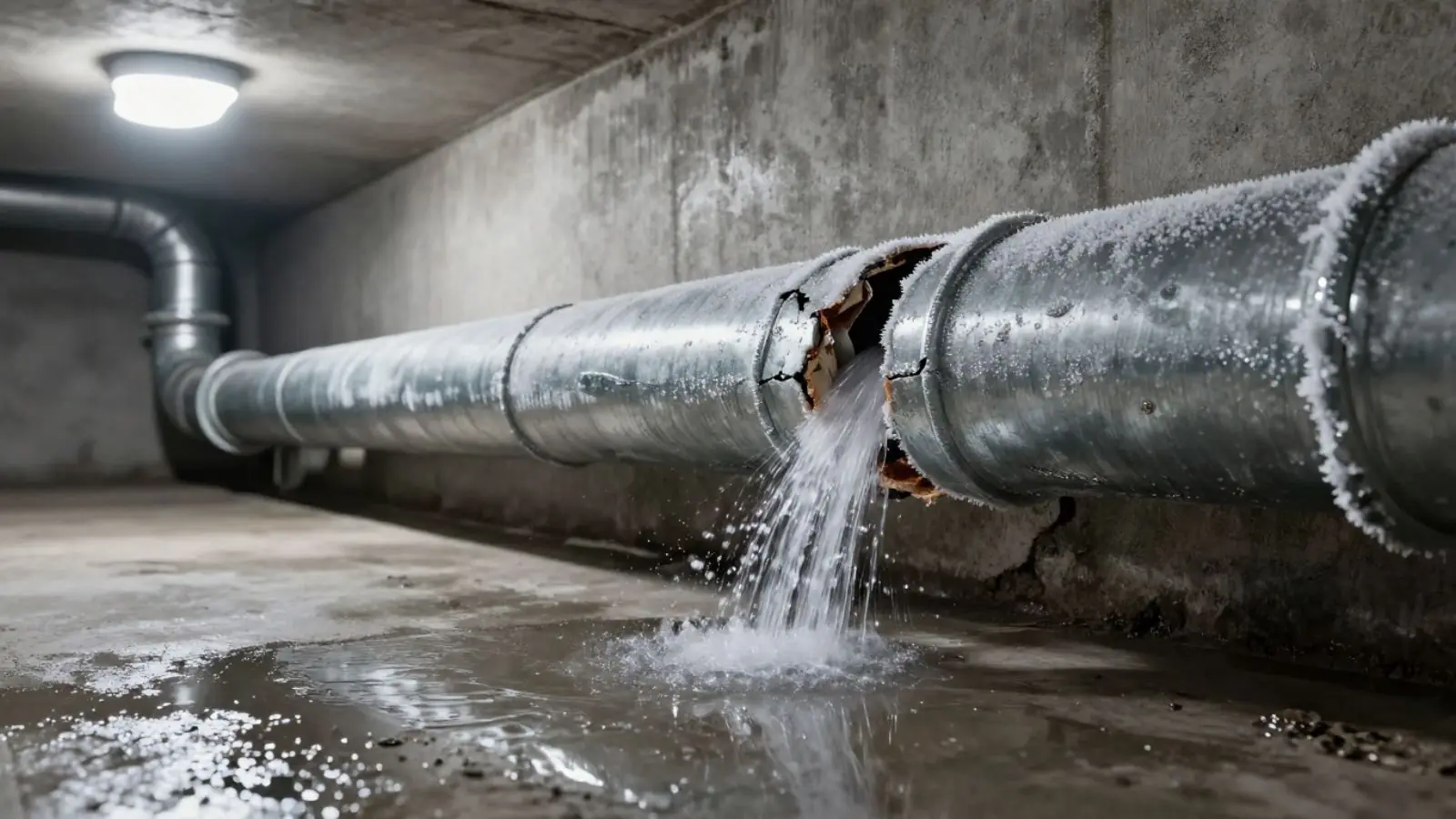
Frozen pipe water damage is what happens after ice splits a water line and the line thaws. The ice itself often holds the water back. Once the temperature rises, the crack opens up and water runs into the wall, ceiling or crawl space around it.
If that is happening now, call (301) 936-0619. The line runs 24/7, and crews respond the same day when available. While you wait, close the main water valve, keep people and pets out of wet rooms, and lift anything valuable off the floor.
Hyattsville winters are cold enough to do this. NOAA's 1991 to 2020 normals from the nearest long-term station, Reagan National Airport, put the January mean at 37.5 F with an average low of 30.1 F. An average low above 30 can sound safe, but a single hard night in a cold snap is all a pipe in an exterior wall needs.
Why the Damage Shows Up After the Cold Breaks
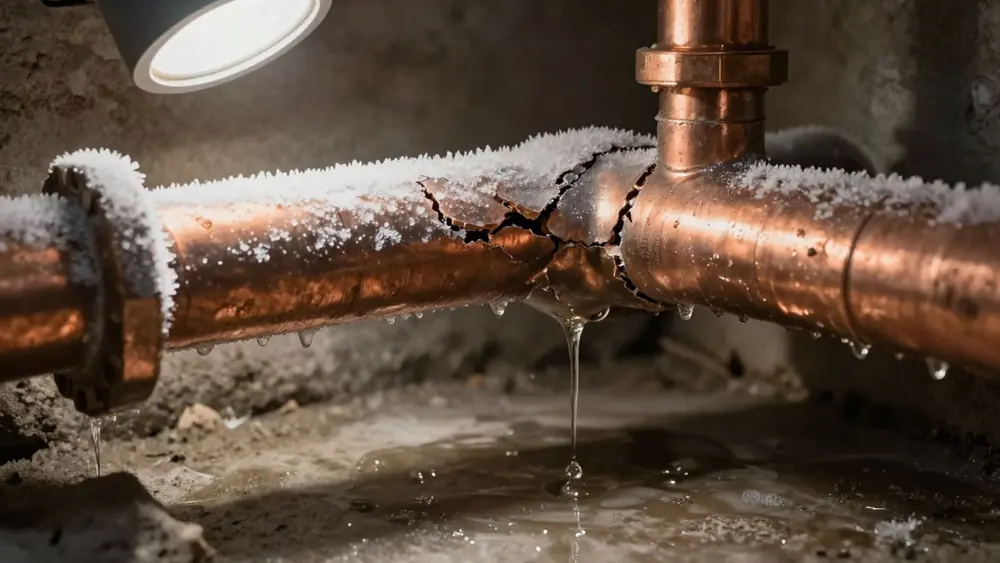
A frozen pipe is blocked, so nothing flows and nothing drips. People often notice only that a faucet gives no water. The split, usually a thin lengthwise crack, stays plugged by ice until the pipe warms.
When the thaw comes, the line is pressurized again and water leaves through the crack. A pinhole can spray into a wall cavity for hours before a stain shows on the other side. That is why a house can look fine on a freezing morning and be wet by the afternoon.
Warm spells in the middle of winter make this worse, because pipes can freeze and thaw more than once. Each cycle widens the weak spot.
Safety Right Now, While the Pipe Is Running
Frozen pipe safety in the first hour
Water near an electrical panel, outlets or ceiling lights is a shock hazard. Stay out of that room. Cut power only if the panel is dry and you can reach it without stepping in water, and call 911 and your electric utility first if there is any electrical risk.
- Close the main shutoff valve where the supply enters the house, then open a faucet on the lowest floor to drain the lines.
- Do not use a torch or open flame to thaw a pipe. Heat from a hair dryer or warm towels is safer, and only on a pipe that is not already leaking.
- If you smell gas, leave the building and call 911 and Washington Gas from outside. The Washington Gas leak line is 844-WASHGAS, option 1.
- If water is coming from the street side of the meter, that is a water main problem. WSSC Water takes main break calls 24 hours a day at 301-206-4002.
Where Pipes Freeze in Local Homes
The pipe that freezes is rarely in the middle of a warm room. This table pairs common cold spots with what you tend to find afterward.
| Location | Why it freezes | What the thaw usually leaves |
|---|---|---|
| Exterior wall behind a sink | Little insulation and cold air against the pipe | Wet drywall, damp insulation and a swollen cabinet base |
| Unheated crawl space | Vents and gaps let cold air reach the lines | Wet insulation, a soaked vapor barrier and damp framing |
| Attic supply or sprinkler line | Cold air above the insulation layer | Stained ceiling below, wet insulation and sagging drywall |
| Garage or utility room | Doors open often and nobody heats the space | Wet slab edges, damp walls and stored items soaked |
| Outdoor spigot line | A hose left attached over winter | Water inside the wall behind the faucet |
Older buildings are the usual suspects. The city counts nearly 1,000 buildings in the Hyattsville Historic District, which the National Register entry says grew mainly after the 1870s. Houses of that age often have supply lines running through outer walls and wall cavities with little insulation.
Pipe split and thawing now?
Call the 24/7 line at (301) 936-0619 and tell the dispatcher where the water is showing up.
How Crews Dry a Thaw Loss
- 1
Stop and locate
The crew confirms the main is closed, then uses a moisture meter and a thermal imaging camera to trace where the water traveled, including inside walls.
- 2
Extract standing water
Pumps and portable extraction units remove water from floors and low spots first, so drying equipment is not fighting a puddle.
- 3
Open what must open
Wet insulation comes out of the cavity. Drywall is cut only where readings say it cannot dry in place, often a flood cut a few inches above the wet line.
- 4
Dry with air and dehumidifiers
Air movers push air across surfaces while LGR dehumidifiers pull moisture out of the air. Wall cavities may get dry air pushed in through small holes.
- 5
Check readings until dry
Meter readings are logged on each visit and compared with an unaffected area. Equipment leaves only when the materials read dry. See water mitigation for how that drying phase works.
What Changes the Size of a Frozen Pipe Job
One split under a sink
Scope: one cabinet and floor sectionCaught within the hour, with a small area of wet cabinet base and subfloor edge.
A split inside an exterior wall
Scope: one wall and the floor belowInsulation and drywall come out on one side, with several days of drying.
An attic line that thawed unseen
Scope: ceilings across a floorWater soaks insulation and runs down through lights and ceilings into rooms below.
A vacant or unheated house
Scope: several floorsWater ran for a long time before anyone saw it, so materials stay wet longer and more must be replaced.
Scope and price are explained before work starts, based on what the readings show in your home.
Insurance and Burst Frozen Pipes
What the Maryland Insurance Administration says
The Maryland Insurance Administration says a homeowners policy may cover water damage from burst frozen pipes if you maintained the pipes and took steps to keep them from freezing. It adds that policies often require you to keep the home at a minimum temperature, or to shut off the water if the house is vacant.
If the insurer finds that preventive steps were neglected, damage from a burst pipe may not be covered. Check your policy and ask your insurer which deductible applies. The pipe or drain itself is often a separate matter from the water damage around it, and no one can promise a claim will be approved.
- Take photos of the split pipe, the wet areas and damaged items before anything is moved.
- Keep the plumber's invoice and your drying records together.
Mistakes That Make a Thaw Loss Worse
Most of these come from reasonable instincts in a stressful hour.
Avoid these
- Waiting for the ice to melt on its own before closing the main valve.
- Turning the heat up and leaving the house, which thaws the pipe with no one there to see it.
- Using an open flame, which is a fire risk inside a wall and can scorch the pipe.
- Closing up a wet wall because the surface feels dry. Moisture meters read what hands cannot. The EPA advises drying water-damaged areas and items within 24 to 48 hours to prevent mold growth.
- Skipping the plumber. Restoration crews dry the building. A licensed plumber repairs the pipe, and a split pipe will leak again if only the drywall is fixed.
Cold Weather Prevention for Older Hyattsville Pipes
The Maryland Insurance Administration's frozen pipes page passes on tips from the Insurance Institute for Business and Home Safety. They include insulating pipes in attics, crawl spaces and exterior walls, letting faucets drip slightly in a hard freeze, and opening cabinet doors under sinks so warm air reaches the pipes.
Disconnect garden hoses before winter and seal gaps where cold air reaches pipes. If a house will sit empty, shutting off the water and draining the lines beats hoping the heat stays on.
Frozen pipe losses can follow storms, so see storm water damage for what weather brings in through other doors. Crews also serve nearby towns such as Mount Rainier and Brentwood, where the same cold nights hit similar housing.
After the Water Is Out
When drying is done, rebuilding is a separate step. Water damage repair covers replacing drywall, insulation and trim once readings show the framing is dry.
If wet materials sat for days before the thaw was noticed, ask about mold. The EPA says mold will not grow without water or moisture, and mold remediation follows ANSI/IICRC S520 when it is found.
Frozen pipe questions from Hyattsville homeowners
Yes. The line at (301) 936-0619 is staffed 24/7, including nights, weekends and holidays. Same-day response is offered when available, and no arrival time is promised on the call.
The dispatcher will ask where the water is and tell you what to do while you wait.
If the pipe is already leaking, close the main valve and call. If it is frozen and not leaking, gentle heat such as a hair dryer can help. Never use an open flame.
Even a thawed pipe may be split, so open the faucet slowly and watch the wall and ceiling nearby for water.
Ice plugs a split like a cork. When the pipe warms, pressure returns and the water finds the crack. The first sign can be a stain, a sound of running water or a drop in water pressure.
Maybe. The Maryland Insurance Administration says policies may cover it when the pipes were maintained and reasonable steps were taken to prevent freezing. Check your policy and ask your insurer about the deductible and any heat requirements.
Both, but the order depends on the leak. Close the main valve first. A plumber repairs the pipe, and the restoration crew dries the building. Calling the line early gets drying started while the plumber is on the way.
It varies with the materials and how long the water ran. Many wall and floor assemblies need several days of equipment, with readings checked each visit. The crew explains the plan and the price before work starts.