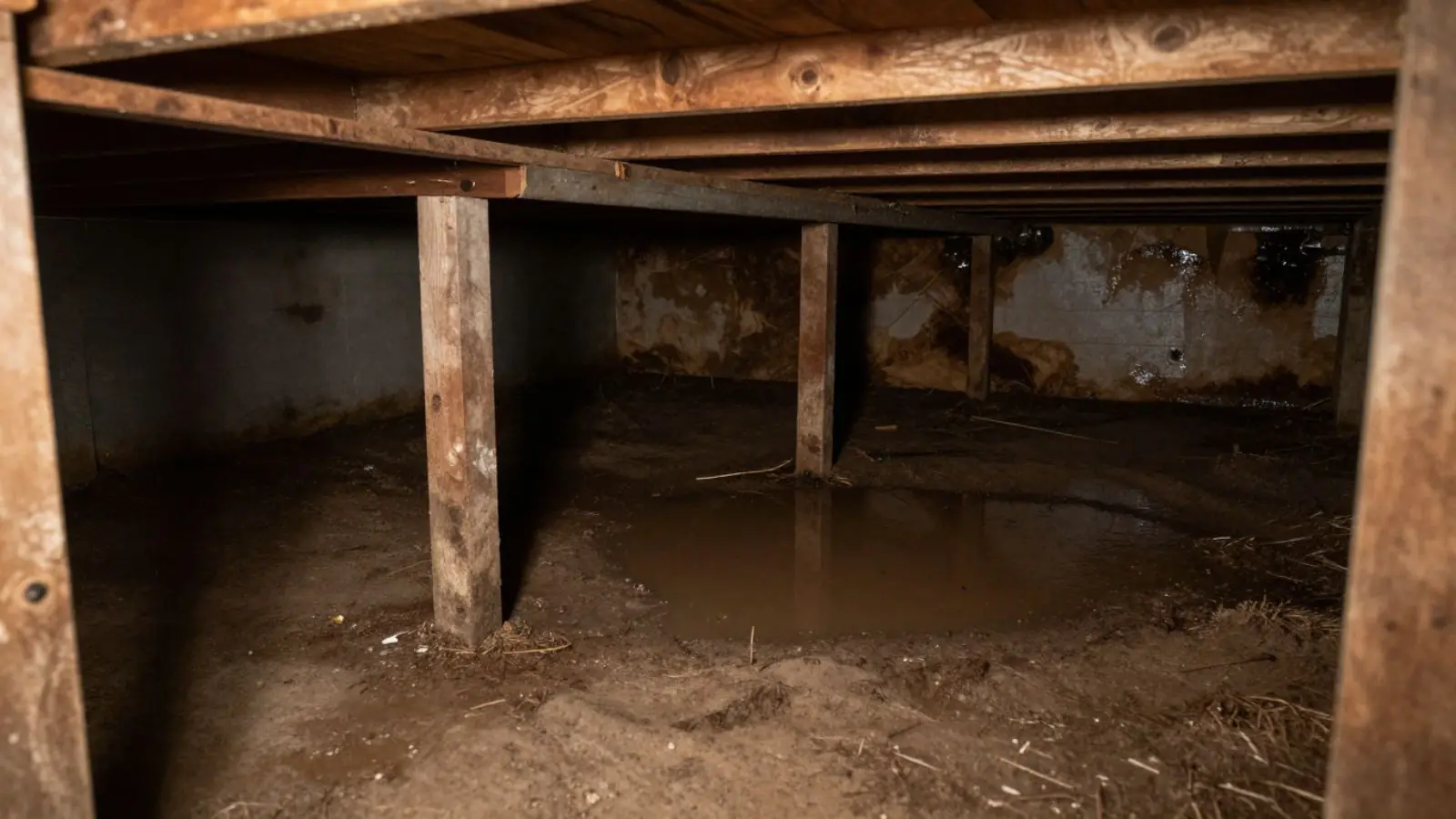
Water Under the House Right Now
Crawl space water damage is water that collects in the low, unfinished space under a floor, then wets the insulation, vapor barrier, joists and subfloor above it. The cause is usually a plumbing leak or heavy rain finding its way in. If water is standing under your house tonight, the (301) 936-0619 line runs 24/7 and same-day response is offered when available.
Crawl spaces are one of several foundation types in Hyattsville. Some houses have full basements, some sit on slabs, and some, especially older ones, have a crawl space. If you are not sure which you have, look for a small access hatch outside or a panel in a closet floor.
First Safety Steps Before You Open the Hatch
A flooded crawl space is a confined space
Do not crawl into standing water. Pipes, wiring, ducts and sometimes gas lines run through the space, and you cannot see them under the surface. Shut the main water valve if a pipe may be leaking, and turn off power to wet areas only if the panel is dry and safe to reach.
- If water touches wiring, outlets or a furnace or water heater, stay out and call 911 and your electric utility before you call the line.
- If you smell gas, leave the building and call 911 and Washington Gas from outside. The leak line is 844-WASHGAS, option 1.
- If the water has a sewage smell, keep everyone away and call WSSC Water at 301-206-4002. Sewage is grossly contaminated water.
- Pipe or duct wrap in an older house may need testing before anyone disturbs it. Do not pull it down yourself.
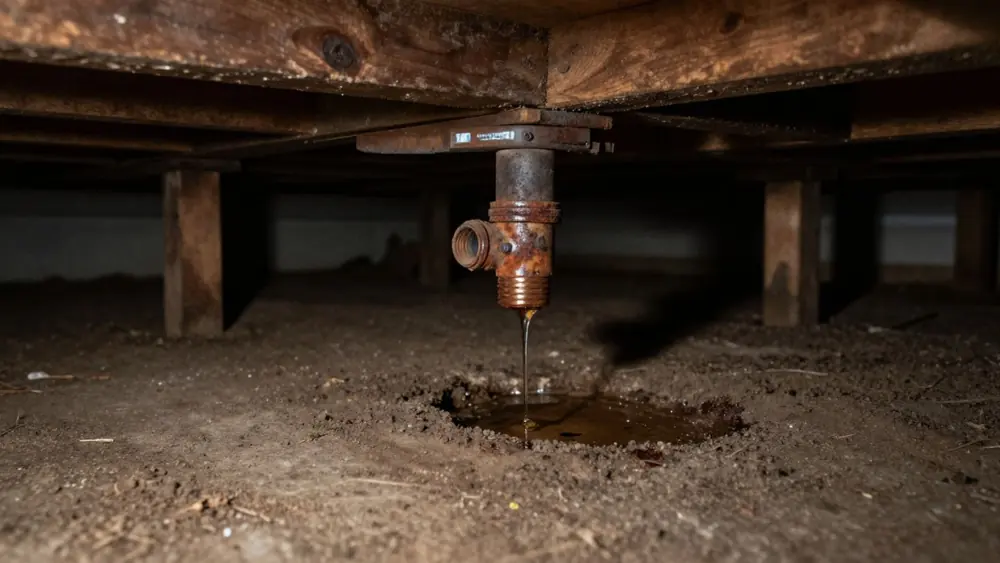
What You See Above When the Crawl Space Is Wet
The first signs are often upstairs. Floors feel cold or spongy over one spot, and baseboards or hardwood may cup. Insulation hangs down from the joists, and a damp, earthy smell rises through floor registers.
Below, a flashlight from the hatch may show a glistening vapor barrier, dripping pipes or a visible waterline on the foundation wall. Any of these means moisture has been present for a while. The EPA advises drying water-damaged areas and items within 24 to 48 hours to prevent mold growth, so an early call matters.
Why Hyattsville Crawl Spaces Take On Water
Water arrives from a few different directions, and the source decides the plan.
Plumbing leaks
A failed supply line, a leaking drain or a split pipe above the crawl space drips onto the soil. Clean-water leaks are easier to dry than sewage.
Heavy rain and poor drainage
NOAA's 1991 to 2020 normals at the nearest long-term station, Reagan National Airport, show 41.82 inches of precipitation a year. Downspouts that dump near the foundation send that water toward the vents and walls.
Aging street drainage
The city's own stormwater study says much of the storm drain system dates from 1960 to 1990, and that 41st Street experiences standing water during and after intense rain. A low spot like that sends runoff toward nearby foundations.
Major storm history
The county flood history page lists June 1972 Tropical Storm Agnes as the county's storm of record and names the Green Meadows subdivision in Hyattsville among the hardest hit. Check the FEMA flood map for your address at msc.fema.gov.
Condensation and open vents
Warm humid air meets cool surfaces under the house and drips. NOAA puts the July mean at 81.0 F, so summer moisture is a real load.
Water under the floor tonight?
Call the 24/7 line at (301) 936-0619 and tell the dispatcher what you see, smell and hear.
Pumping, Drying and Monitoring Under the Floor
- 1
Stop the source and pump
The plumbing is shut off, then a submersible pump moves standing water out through a hose. Discharge goes where it will not harm a neighbor, as the next section explains.
- 2
Remove wet insulation
Fiberglass batts that soaked up water sag and hold moisture against the subfloor. They are bagged and removed, and the vapor barrier is lifted if it traps water.
- 3
Map and dry the structure
Moisture meters and a thermal imaging camera read the joists and subfloor. Air movers, LGR dehumidifiers and sometimes HEPA air scrubbers dry the space and the floor above.
- 4
Monitor until dry
Readings are taken daily. The crawl space is not cleared until framing reads dry and the source is fixed.
Where the Pumped Water Is Allowed to Go
The city's resident sump pump brochure says sump pump water must not be directed onto a neighboring property or over the public right of way. The same sense applies to a pump hose from a flooded crawl space. A hose that runs across a sidewalk or into a neighbor's yard can create a new problem.
Point the discharge away from the foundation and onto your own lot. Prince George's County also publishes a Residential Drainage Manual that covers basement flooding, waterproofing, drainage systems and sump pumps. It is a useful read before you add a drain or a pump of your own.
Water Source and First Move
Match what you see to the first move, then call the line.
| What you see | Likely source | First move |
|---|---|---|
| Clear water spraying or dripping from a pipe | Supply line leak | Shut the main valve and call a plumber and the line |
| Water standing after rain, no pipe leak | Runoff or groundwater | Stay out, check the panel, call the line |
| Foul smell, gray or dark water | Sewage from a drain line | Stay away, call WSSC Water, then the line |
| Damp insulation and dripping ducts only | Condensation | Call an HVAC company for the ducts and the line for the wet materials |
| Water near the water heater or furnace | Appliance leak or flood | Stay out of the water and call 911 for any electrical or gas risk |
What Changes the Size of a Crawl Space Job
Small clean-water leak
Scope: one sectionA supply line drip, caught early, with a few wet batts and limited drying.
Standing clean water
Scope: full crawl spacePumping, insulation removal and several days of drying under the house.
Rain or groundwater entry
Scope: contaminated spaceOutside water is often significantly contaminated. Wet materials come out and cleaning follows.
Sewage or long-term moisture
Scope: structuralContaminated materials, wet framing and a wet subfloor above add days and rebuild work.
Water category, space size, insulation type, access, drying days and rebuild scope set the price, and it is explained before work starts.
Insurance and the Crawl Space
Plumbing versus flooding
The Maryland Insurance Administration says most homeowners policies do not cover flooding, and sewer or water backup is an optional endorsement that insurers must offer. A sudden plumbing break is treated differently from slow seepage over time. Mold is excluded in most policies unless it results from a covered peril.
Read the water and flood sections of your policy, photograph the water and the damage before it is removed, and ask your insurer how it treats crawl space water. FEMA says a National Flood Insurance Program policy generally has a 30-day waiting period, so it must be in place before a storm, not after one.
Prevention and Mistakes to Avoid
- Extend downspouts away from the foundation so roof water does not collect at the crawl space wall.
- Check the grade. Soil that slopes toward the house sends rain to the vents and the wall.
- Ask about the vapor retarder. A U.S. Department of Energy job aid says a well-installed one helps minimize ground moisture vapor, and seams should overlap at least 12 inches.
- Do not run a fan or dehumidifier before the source is fixed. It dries air while the water keeps coming.
- Do not leave wet insulation in place. It holds water against the joists and subfloor.
- If mold appears on framing, see mold remediation and fix the water first.
Related Pages for Water Under a House
Standing water under the house needs extraction before drying starts, and that work is covered on the emergency water removal page. If the water came from rising ground water or a creek, the flood damage restoration page explains that case. For storms, see storm water damage.
Crews respond from Hyattsville to nearby towns such as College Park and Mount Rainier. The older housing in the Hyattsville Historic District, nearly 1,000 buildings that grew mostly after the 1870s, makes crawl space checks a smart habit.
Crawl space water questions from Hyattsville homeowners
Yes. The line at (301) 936-0619 is staffed 24/7, including nights and weekends. Same-day response is offered when available, and no arrival time is promised on the call.
The dispatcher will ask where the water is and what the source seems to be, then tell you how to stay safe.
No. Crawl spaces are one of several foundation types here. Others have full basements or slab floors. If you are unsure, check for an access hatch outside or a floor panel inside.
Only if no power, gas or sewage is involved and you can reach the space safely. Keep the discharge off a neighbor's property and the public right of way, as the city's sump pump brochure says.
It depends on the source, the amount of water and the materials. A clean-water leak caught early can dry in days. Daily readings of the joists and subfloor decide when it is dry.
Fiberglass batts that held water are usually removed, since they hold moisture against the framing. Rigid foam board often can be dried and kept. The crew checks each material.
This service covers the water event: pumping and drying. If mold is found, mold remediation is a separate step that follows the S520 standard. Maryland does not currently run a mold remediation license under its 2008 law, so ask any company what standards it follows.