What commercial water damage covers
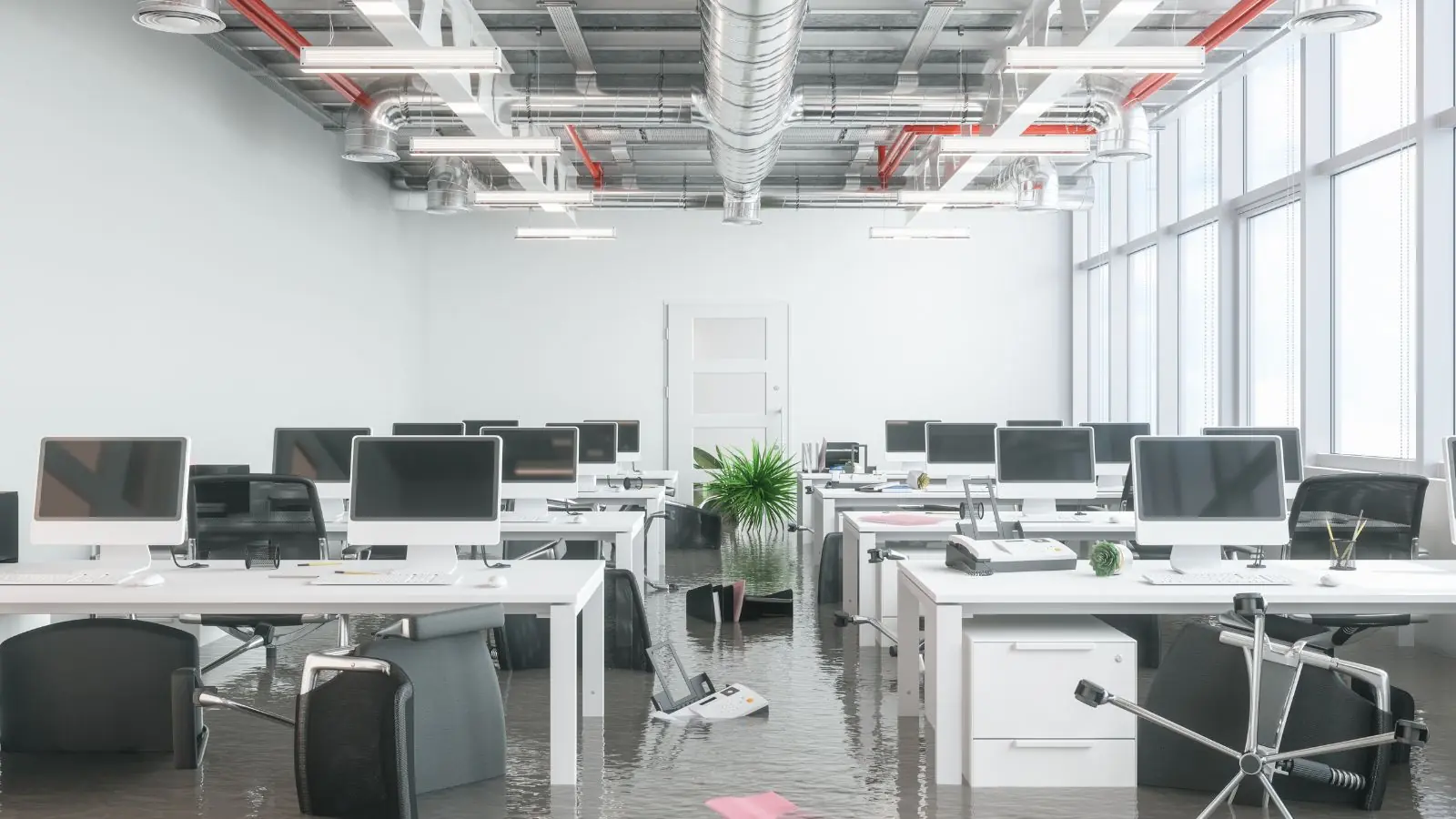
Commercial water damage restoration in Hyattsville, MD is the removal of water and the drying of a business property after a leak, a burst pipe, a sprinkler discharge or a storm. The steps are the same as in a house: stop the water, extract it, dry the structure and record what happened. The difference is scale, shared systems and the pressure to reopen.
The dispatch line is open 24 hours a day, seven days a week. Same-day response is offered when available, and no arrival time is promised. Scope and price are explained before work starts, in writing, so an owner or property manager can weigh the plan before approving it.
Extraction is covered in detail under emergency water removal, and the drying phase under structural drying.
Where Hyattsville's commercial buildings sit
Several commercial areas in the city have their own character. The Prince George's Plaza Transit District, described in the city community profile and county planning documents, includes the Mall at Prince George's at 3500 East-West Highway, University Town Center and Belcrest Center. Large, multi-tenant buildings like these share walls, ceilings and risers, so one tenant's leak can reach another's space.
The Gateway Arts and Entertainment District runs along Route 1, a state-designated district, and the Hyattsville Armory is at 5123 Baltimore Avenue. The Armory was built in 1918 and listed on the National Register in 1980. Age and construction affect how drying is planned, so each building gets its own plan.
These are places in the city, not clients. The point is that a historic armory and a large shopping district do not dry the same way.
Safety steps in the first hour at a business
Business safety checklist
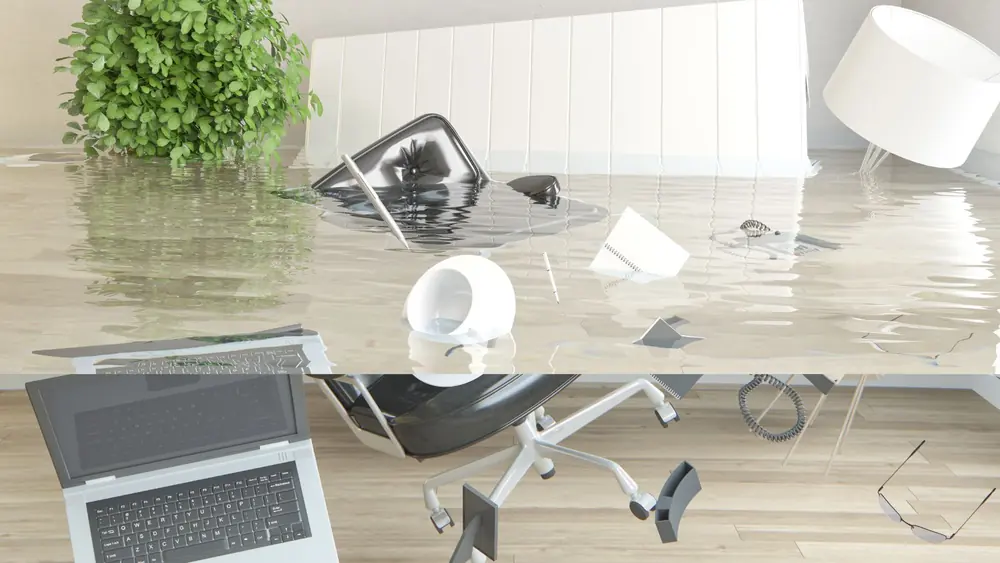
Keep staff and customers out of wet areas until the water source and the power are dealt with. Slips and shocks cause more injuries than the water itself.
- Shut off the water at the fixture or the main valve. If a fire sprinkler line is the source, call the fire protection company, since that system may need to stay charged.
- Cut power to wet areas only if the panel is dry and safe to reach. Call your electric utility or 911 for any sparking or buzzing.
- If you smell gas, leave the building and call 911 and Washington Gas from outside.
- For a water main break or sewer backup into the building, WSSC Water lists a 24-hour emergency line at 301-206-4002.
- Move inventory, paper records and electronics off the floor and into a dry space.
- Take photos and video before anything is moved, and note the time you discovered the loss.
A decision guide for owners and tenants
Responsibility is often unclear in leased space. The lease decides it, so read it before anyone signs a repair approval.
| Situation | Who may need to act | First question |
|---|---|---|
| Leak starts in your suite from your own fixture | Tenant | Does the lease make you responsible for fixtures and contents? |
| Water comes through the ceiling from the unit above | Landlord and upper tenant | Who has access to the source and who gives approval to open walls? |
| Roof, riser or shared plumbing line fails | Landlord or property manager | Is the building owner notified in writing and who coordinates the drying? |
| Sprinkler or fire line discharge | Landlord and fire protection contractor | Does the system need to be recharged before drying? |
| Sewer backup into a ground-floor suite | Depends on where the blockage is | Is it in the building line or WSSC's main? |
Landlord and tenant duties vary by lease. A lawyer or your insurance agent can explain the details.
Business closed by water?
Call (301) 936-0619 and describe the source and the space. Scope and price are explained before work starts.
How a commercial drying job is handled
- 1
Call and triage
The dispatcher asks what the source is, whether it is stopped, how large the area is and whether the space can be shut for a day or more.
- 2
Survey and moisture map
Moisture meters and thermal imaging cameras show where water has spread under flooring, into walls and across ceiling tiles.
- 3
Extract standing water
Extraction units pull water from carpet, tile and concrete. Contaminated water is handled differently from clean water.
- 4
Dry the structure
Air movers, LGR dehumidifiers and, in cold spaces, desiccant units run on a schedule. Daily readings are logged. ANSI/IICRC S500 is the published standard for this work.
- 5
Document the loss
Photos, moisture logs and equipment records go to the owner. They help when an insurer asks what happened and when.
What changes the scope and price
One suite, clean source
Scope: smallA few rooms, short drying time and little demolition.
One floor or one tenant space
Scope: moderateFlooring, wall bases and ceiling tile all need checks.
Water on several floors
Scope: largerWater has traveled through floors and risers, so equipment is placed at several levels.
Shared walls and multiple tenants
Scope: extensiveAccess, notice and coordination add time to the plan.
Sewage or long-standing water
Scope: specializedRemoval, sanitizing and closer monitoring before any rebuild.
Area, materials, water category, drying days and access are the main cost factors. Scope and price are explained before work starts.
Business insurance and records
General guidance only
Commercial property policies differ a great deal, so read yours or call your agent. Sudden and accidental water damage is often treated differently from a slow leak or flood, and business interruption or tenant improvements may be separate items. Some policies set a notice deadline.
The company does not bill your insurer or promise a claim will be approved. It can provide photos, moisture logs and a written scope that you can send to your own insurer. Keep receipts for emergency steps and note any time the business was closed.
Mistakes that prolong a business closure
The usual delays are about communication, not equipment.
- Waiting for the landlord to respond before calling for help. Mold needs only moisture, and the EPA advises drying water-damaged areas within 24 to 48 hours.
- Moving inventory around without photos. Later, the insurer will ask what was damaged and where.
- Opening for business over wet carpet or tile. Wet floors are a safety risk and hide water spread.
- Treating a sewage loss as ordinary water. That belongs under water damage cleanup.
- Ignoring the neighbors. A leak that crosses a shared wall may need a joint plan with the unit next door. The same approach applies in College Park and Bladensburg.
Commercial water damage questions from Hyattsville businesses
The line runs 24 hours a day, seven days a week, and same-day response is offered when available. No arrival time is promised. Tell the dispatcher what the source is and whether the building can be shut.
The process works for any building where water needs to be extracted and the structure dried. Scope and price are explained before work starts, and the plan is built around the size of the loss, not the type of business.
The lease decides, along with where the leak started. Tenants are often responsible for their fixtures and contents, and landlords for the roof and shared systems. Read the lease and talk to your insurance agent or a lawyer.
Yes. Photos, moisture readings and equipment logs are kept during the job, and you can send them to your insurer. The company does not file the claim and cannot promise it will be approved.
Sometimes. Noise, wet floors and equipment cords all affect that. A technician can explain which rooms can stay in use, and which should be closed, after seeing the space.
Take photos, tell your landlord in writing and describe the source on the call. Access to the upper unit is often the key step. Structural drying can start in your space while the source is being sorted out.