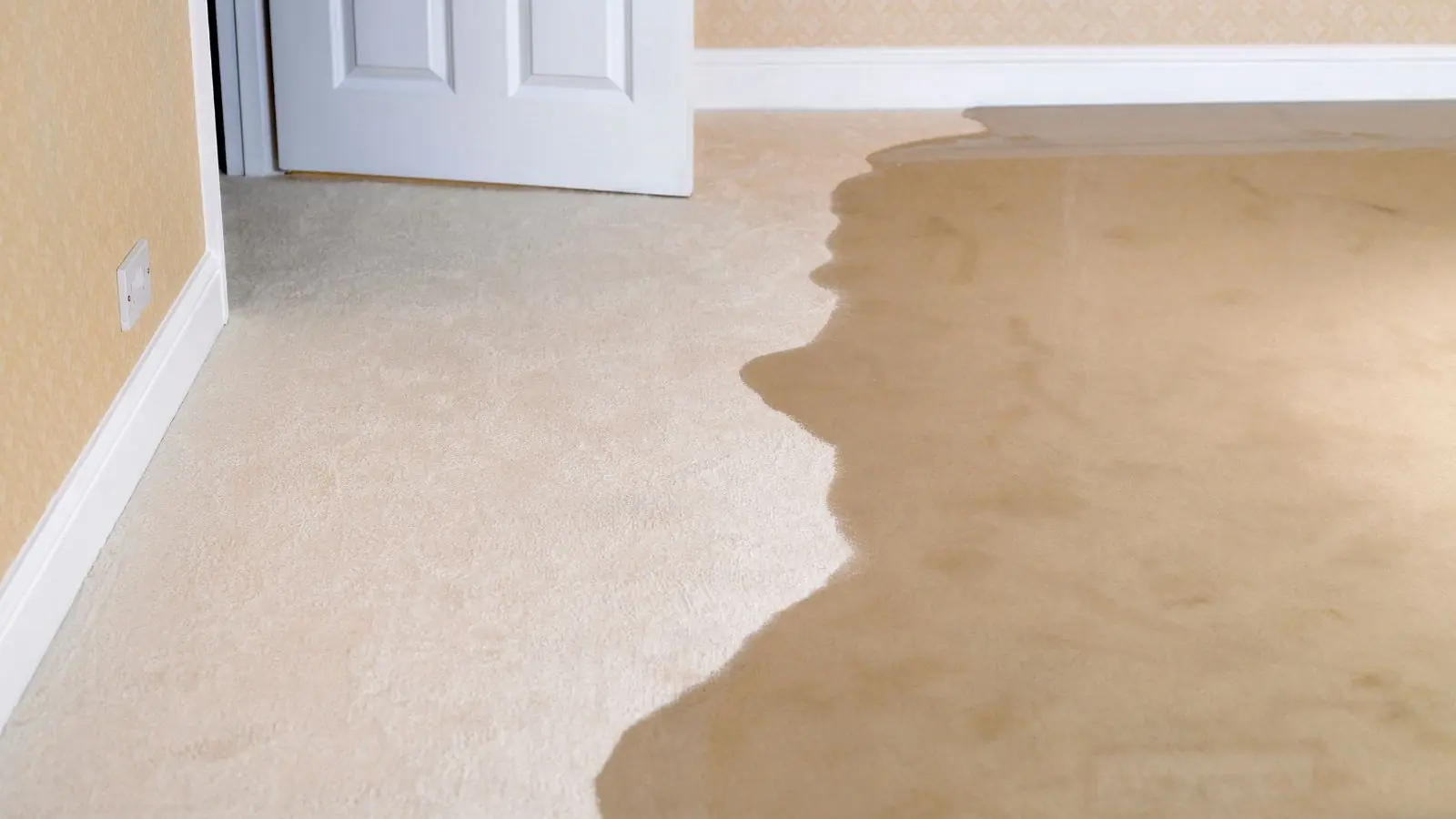
When wet carpet is worth saving
Carpet water damage restoration in Hyattsville, MD is the process of removing water from carpet, pad and the floor beneath, then drying all three or replacing what cannot be dried safely. Carpet is a thin top layer. The cushion under it, called the pad, holds far more water than the fibers do.
The decision starts with where the water came from. Clean water from a supply line can often be dried in place if it is caught quickly. Water from a sewer, a floor drain or a flood is a different matter, and the carpet is usually removed.
The EPA advises drying water-damaged areas and items within 24 to 48 hours to prevent mold growth. Carpet that sits wet longer is much harder to recover.
Three water categories, three different answers
The ANSI/IICRC S500 standard for professional water damage restoration describes water in categories. In plain words they work like this.
| Category | Typical source | Usual carpet outcome |
|---|---|---|
| Category 1, clean | Broken supply line, tub overflow with clean water | Often extracted and dried in place if caught early |
| Category 2, significantly contaminated | Washing machine discharge, dishwasher overflow | Carpet may be cleaned and dried, pad is often replaced |
| Category 3, grossly contaminated | Sewage, rising floodwater, long-standing water | Carpet and pad are usually removed and thrown away |
| Clean water left too long | Any source after roughly two days | May be treated like a higher category, because bacteria and mold grow |
The category is judged on site, not by phone, so a technician will check the water and the materials.
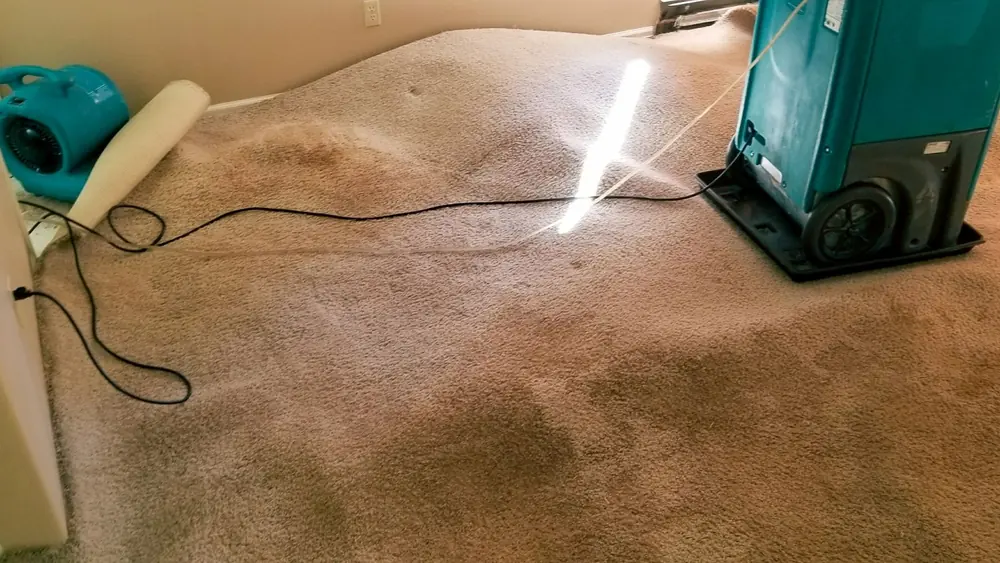
What you see, smell and feel in a soaked carpet
Squishing underfoot is the obvious sign. Others are quieter. Dark rings along the baseboard, a sour smell that gets stronger in the afternoon, carpet that lifts or ripples at the seams, and rust on tack strips all mean water has spread beyond the surface.
Walls matter too. Water wicks upward into drywall a few inches above the floor, and the paint may bubble. If that has happened, the drying plan has to include the wall base, which is covered in more detail under structural drying.
A musty smell without visible water suggests moisture is trapped in the pad or subfloor. Pulling back a corner of the carpet is the fastest way to check.
Safety steps for the first hour with wet carpet
Carpet and electrical safety
Water in carpet spreads under furniture and along walls, sometimes to outlets and power strips. Do not step in a wet room with plugged-in cords on the floor.
- Stop the source of water first. Shut the fixture valve or the main water valve.
- Cut power to the room at the breaker only if the panel is dry and safe to reach. If you cannot do that safely, call your electric utility or 911.
- If you smell gas, leave the building and call 911 and the gas company from outside.
- Keep children and pets off carpet that took in sewage or floodwater. The CDC notes that floodwater can contain dangerous bacteria from overflowing sewage.
- Lift furniture off the carpet or put foil or plastic under the legs. Wood furniture stains carpet quickly when wet.
- Do not use a household vacuum on wet carpet. Wet-dry units made for water are different, and an ordinary vacuum is a shock risk.
Carpet still wet?
Call (301) 936-0619 and describe where the water came from. Scope and price are explained before work starts.
How the crew dries carpet in place
- 1
Extract the water
A truck-mounted or portable extraction unit pulls water out of the carpet and pad. Crews work in overlapping passes to remove as much as possible before drying starts.
- 2
Test and decide on the pad
A moisture meter reads the carpet, pad and subfloor. Contaminated pad comes out. Clean pad that is thin and dense may be dried, but many crews replace it anyway because it is low in cost compared with the risk.
- 3
Float the carpet
The crew loosens a corner from the tack strip, lifts the carpet and sets air movers underneath so the air dries the pad and subfloor together. This is called floating.
- 4
Dehumidify and monitor
LGR dehumidifiers and air movers run with the room closed. Readings are checked daily until carpet, pad and subfloor reach the goal.
- 5
Clean, deodorize and re-stretch
Once dry, the carpet is cleaned, deodorized and stretched back onto the tack strip, with fresh pad if the old one was removed.
What changes the scope and price of a carpet job
A damp patch from a small clean leak
Scope: smallExtraction, a few air movers and a quick check of the pad.
One room, clean source
Scope: moderateFloating, new pad in some cases and a day or two of dehumidifying.
Several rooms or stairs
Scope: largerMore carpet to lift, more equipment and more drying days.
Affected subfloor or tack strip
Scope: extensiveWet wood or rusted strips need drying or replacement before new carpet goes down.
Sewage or flood source
Scope: specializedRemoval and disposal, plus cleanup of the subfloor before any new materials.
Carpet area, pad type, water category and drying days set the price, and the scope is explained before work starts.
Insurance and wet carpet
What may be covered
Sudden and accidental water, such as a failed supply line or an appliance hose that let go, is often covered by a homeowners policy. Slow leaks are often excluded. The Maryland Insurance Administration says most homeowners policies do not cover flooding.
Take photos of the carpet, pad and the source before anything is removed. Keep a small sample of the carpet and note the room size. Check your policy and ask your insurer what it needs to see.
Carpet and rented homes in Hyattsville
The Census QuickFacts figure for 2020 to 2024 puts owner-occupied housing in Hyattsville at 48.4 percent. Roughly half of homes are rentals, and many of those have wall-to-wall carpet that belongs to the landlord.
The Maryland Insurance Administration notes that renters policies cover your belongings, not the building. If a washer or pipe leak ruins landlord-owned carpet, report it in writing. Your own rugs, furniture and electronics fall under your renters coverage, if you have it.
Water in an upstairs unit often drips through the ceiling below, so neighbors should compare notes. Drying a downstairs apartment is covered under water mitigation, and the same steps apply in Mount Rainier and Brentwood.
Mistakes that cost homeowners their carpet
A few common choices turn a saveable carpet into a replacement.
- Waiting more than a day or two. Mold needs only water and time, and the EPA says it will not grow without moisture.
- Using bleach or mixing cleaners. The CDC warns never to use bleach in a closed space and never to mix bleach with ammonia.
- Running a heater on the carpet. Heat can lock in odor and shrink some fibers.
- Putting furniture back on damp carpet. Legs leave stains and trap moisture.
- Skipping the pad check. A dry top with a wet pad invites mold underneath.
- Treating sewage-wet carpet as clean. Category 3 carpet should be thrown out, and water damage cleanup covers the disposal and sanitizing.
Carpet water damage questions from Hyattsville homes
The dispatch line runs 24 hours a day, seven days a week. Same-day response is offered when available, with no promised arrival time. Tell the dispatcher what the water came from and how long the carpet has been wet.
It depends on the source, the time and the pad. Carpet that took in clean water and was extracted quickly can often be dried in place. Carpet that took in sewage or floodwater is usually removed.
Pad is a foam or fiber cushion that acts like a sponge, and it holds water long after the carpet looks dry. Pad that touched contaminated water is nearly always replaced. Clean pad that has been caught quickly is sometimes saved.
The EPA advises drying water-damaged areas and items within 24 to 48 hours to prevent mold growth. If it has been longer, ask a technician to read the pad and subfloor. Mold remediation is a separate job if growth is already there.
A smell usually means the pad or subfloor stayed wet or the water was dirty. Deodorizing helps only once everything is dry. If the odor stays, a technician should check under the carpet.
No. Carpet is lifted and floated, and the pad is often removed. Hardwood is dried with panels or mats and the boards are watched for cupping, which is covered under water damage repair.