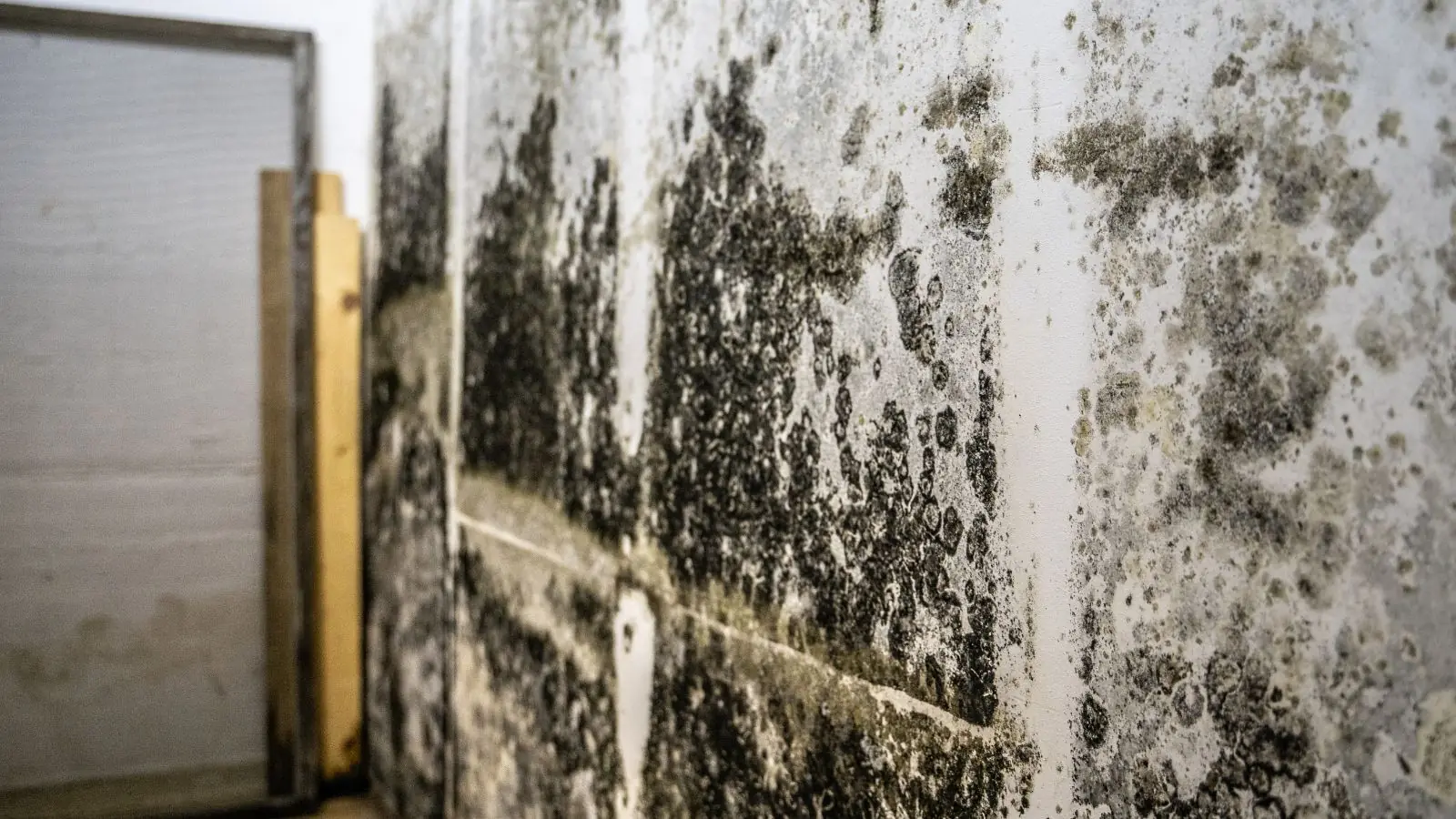
Hard walls can be cleaned, soft walls usually cannot
To remove mold from a basement wall, first identify the material. The EPA says to scrub mold off hard surfaces with detergent and water and to dry completely. That method suits painted block, poured concrete and sealed masonry. Porous drywall, paneling and insulation that have grown mold are normally cut out and replaced.
The EPA also gives a size line: if the moldy area is less than about 10 square feet, many homeowners can handle it. Past that, or if the water was dirty, a professional is the safer call.
What your wall is made of decides the plan
| Wall type | Typical approach | Watch for |
|---|---|---|
| Painted concrete block | Detergent and water, scrub, dry completely | Peeling paint that traps moisture behind it |
| Bare block or masonry | Stiff brush with detergent, then dry | Rough, porous face that holds residue |
| Painted drywall | Cut out wet or stained sections | Paper facing and gypsum soak up water |
| Wood paneling or framing | Clean surface mold, dry, check moisture | Soft wood or ongoing dampness |
| Insulation against the wall | Remove and replace | It stays wet and feeds the problem |
Detergent and water, done safely
- 1
Protect yourself
Wear gloves, eye protection and a well-fitted respirator. Open a window or run a fan that exhausts outdoors, and keep the dust down.
- 2
Mist and scrub
Dampen the area lightly so spores do not rise, then scrub with a stiff brush and detergent in water. Work in small sections.
- 3
Wipe and dry
Wipe the wall with clean water and dry it completely with towels, fans and a dehumidifier. A moisture meter confirms it is dry.
- 4
Bag the waste
Seal brushes, rags and any removed material in plastic bags before carrying them through the house.
Mold on a wet basement wall?
Call (301) 936-0619 to talk through the size of the area and whether the wall is still damp.
Bleach: what EPA and CDC actually say
Bleach is not the default answer
The EPA says bleach is not recommended as a routine practice during mold cleanup. On hard surfaces, detergent and water does the cleaning, and drying does the rest.
The CDC adds that you should never use bleach in a closed space, and never mix bleach with ammonia or other cleansers. A basement with little airflow is exactly that kind of space.
- Do not combine bleach with any other cleaning product.
- Ventilate the room before and during any cleaning.
- If floodwater or sewage touched the wall, stop and call a professional.
Find the water before you scrub
A basement wall touches cool soil on one side and indoor air on the other. Cool surfaces collect condensation, and masonry can wick groundwater through its pores. Neither needs a flood to keep the wall damp enough for growth.
Stored boxes pushed against the wall block airflow and make it worse. Pulling items a few inches away, running a dehumidifier and watching for new stains are easy steps to try before any cleanup.
Mold needs moisture, so cleaning without fixing the cause is a short-term answer. Check the gutter downspouts first. Water that drops next to the foundation wall can soak through block, so extend the discharge away from the house.
Then check the sump pump if you have one. Test it by pouring water into the pit and watching it run. The city's brochure says sump pump water must not be directed onto a neighboring property or over the public right of way, so route the discharge with that in mind.
Look at the inside of the wall too. A stain line that sits low and runs along the floor suggests groundwater or a leak at the wall-floor joint. Stains higher up, or near a window, suggest water entering from outside or from a pipe above. Marking the line with a pencil and the date shows whether it grows after rain.
Hyattsville, MD: what the city's stormwater study says
The city's own Lower Ward 1 Resilient Stormwater Systems Study says 41st Street experiences standing water during and after intense rain. It notes that frequent downpours in 2018, the wettest year on record for the Washington, DC area, spurred multiple flood events.
The study also says much of the storm drain system dates from 1960 to 1990, and that a Hyattsville-Riverdale levee system protects some areas from the 100-year flood. For a basement, the lesson is practical: a low street or a clogged inlet can send water toward a foundation in a downpour even when no river overflows. Check the FEMA flood map for your address at msc.fema.gov.
When containment and a professional are the right call
Call in help when the patch is larger than about 10 square feet, when the wall is wet from floodwater or sewage, when mold keeps returning, or when it sits behind finished walls. The EPA says to use a professional who has experience with buildings damaged by contaminated water.
Larger jobs use negative air containment and HEPA air scrubbers so spores stay in the work area, with remediation following ANSI/IICRC S520. See our mold remediation service for how scope and price are explained before work starts. If the basement is wet, water mitigation usually comes first.
Basements in other nearby towns face the same mix of rain and old drains. The line also serves College Park, covered on the College Park water damage restoration page, and Brentwood, on the Brentwood restoration page.
Frequently asked questions
The EPA says bleach is not recommended as a routine practice during mold cleanup. Detergent and water, followed by thorough drying, is the method it describes for hard surfaces.
The CDC says never to use bleach in a closed space and never to mix it with ammonia or other cleansers.
The EPA guideline is that areas of mold smaller than about 10 square feet can often be handled by the homeowner. Larger areas, or any mold after floodwater or sewage, call for a professional.
No. Paint over a damp wall can blister and hide the problem. Clean, dry and correct the moisture source first.
The city's stormwater study says 41st Street has standing water during and after intense rain, and much of the storm drain system dates from 1960 to 1990. A blocked inlet, a low street or a failed sump pump can send water to a foundation.
Check the FEMA flood map for your address at msc.fema.gov.
The Maryland Insurance Administration says mold is excluded in most policies unless it results from a covered peril. Flood damage is almost never covered by standard homeowners policies. Check your policy and ask your insurer.
Testing can help in some cases, such as when a lender or buyer asks for it. It does not replace fixing the water. Remediation and testing follow ANSI/IICRC S520, and health questions belong with a physician.