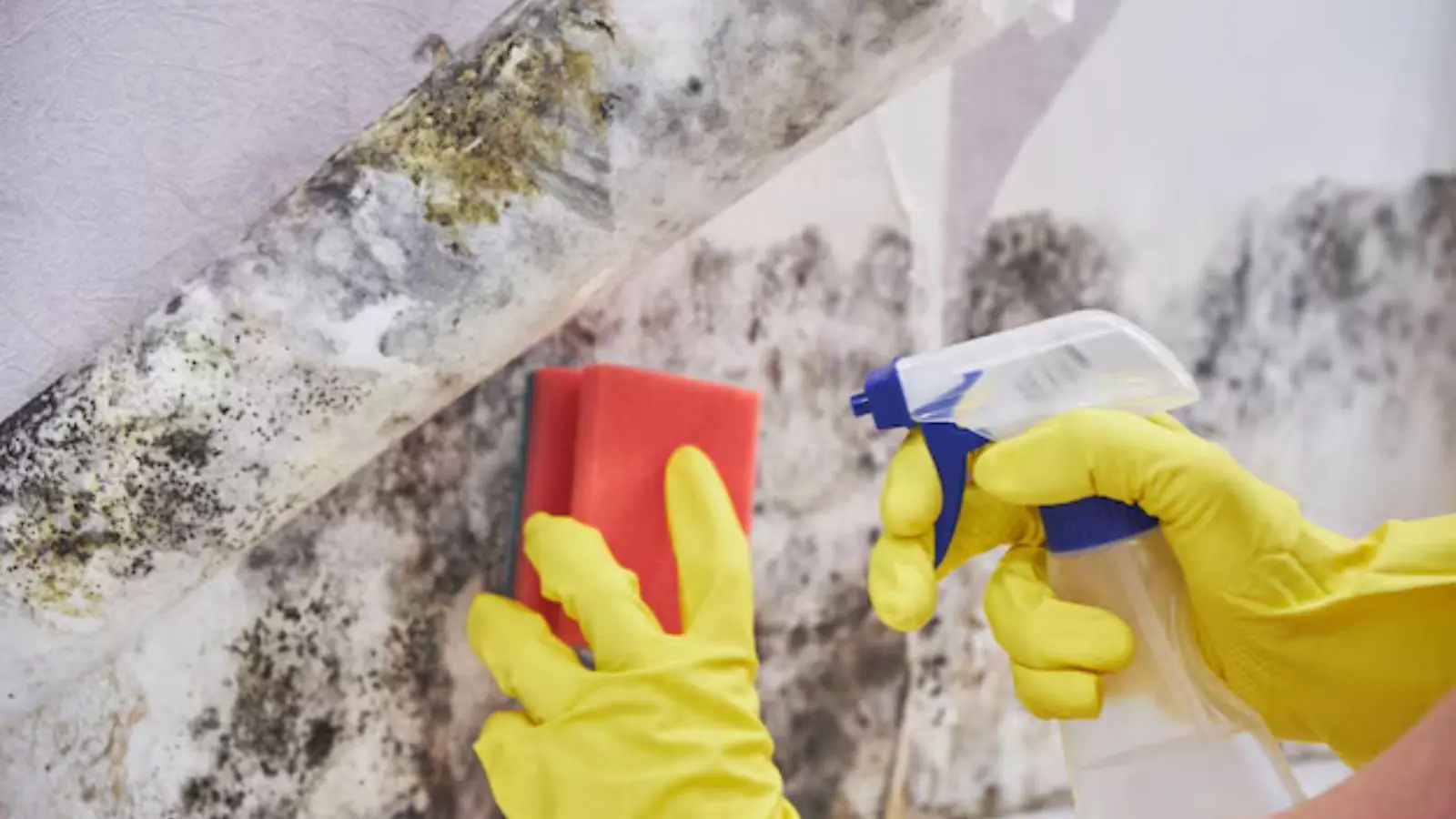
The plain answer: detergent, water and complete drying
The EPA's instruction is to scrub mold off hard surfaces with detergent and water, then dry completely. That is the sentence the rest of this page builds on. It applies to small areas, which the EPA puts at less than about 10 square feet.
Without water or moisture mold cannot grow, per the EPA, so the lasting fix is finding and stopping the water. Cleaning without that step is a temporary cosmetic job. If you live in Hyattsville, MD and the patch is bigger than a door, or the material is soft, keep reading before you pick up a brush.
What the sources say, and what they leave out
Here is an honest limit. The EPA and CDC pages this guide relies on name detergent and water as the method for hard surfaces. They do not discuss vinegar, baking soda, essential oils or other home remedies, so we do not recommend, rate or rule on them.
If you want to try something the sources do not mention, you are on your own judgment. What we can say is that none of those products replaces drying and fixing the leak. Whatever you use, a surface that stays damp invites regrowth.
This page makes no health claims. Questions about symptoms or exposure belong with a physician.
Cleaning a small hard surface, step by step
- 1
Stop the moisture
Fix the dripping trap, leaking window or wet wall first. Aim to get the area dry inside the EPA's 24 to 48 hour window.
- 2
Check the size and the material
Measure the patch. If it is under about 10 square feet and on tile, glass, a sealed counter or other hard surface, you can proceed.
- 3
Scrub with detergent and water
Use a brush or cloth with detergent in water. Wear gloves, and open windows for fresh air.
- 4
Dry completely
Wipe the surface and run a fan or dehumidifier. Check again the next day, since leftover dampness lets growth restart.
- 5
Watch the spot
Look at it weekly. If it returns, the moisture source is still active and a deeper look is needed.
Which materials can be cleaned and which come out
| Material or situation | Usual approach | Note |
|---|---|---|
| Tile, glass, sealed counters | Detergent and water, dry completely | Hard surfaces are the cleaning case the EPA describes |
| Ceiling tile | Usually removed | Porous, so surface cleaning does not reach the growth |
| Carpet and pad | Usually removed if moldy | Fibers and padding hold moisture |
| Drywall with growth | Usually cut out and replaced | Paper facing and gypsum are porous |
| Patch larger than about 10 square feet | Call a professional | Beyond the EPA's small-area guideline |
| Water from sewage or floodwater | Call a professional | The EPA says to call someone with experience in contaminated water damage |
Do not paint over mold. Paint hides it without removing it, and it will show through again while the moisture remains.
Patch bigger than a door, or the wall is soft?
Call (301) 936-0619 to talk through scope. Scope and price come first, before anything is torn out.
Bleach and ammonia: what the EPA and CDC say
On bleach, the EPA does not recommend it as a routine step in mold cleanup. The CDC adds a hard safety rule: no bleach in a closed space, and never bleach mixed with ammonia or other cleansers. Those pairings are a known hazard.
Mixing is the main risk because people stack products when one does not work. The safe habit is simple: use one cleaner at a time, rinse between products and keep the room ventilated.
Most household cleaners are not meant to meet each other. If you switch products, rinse the surface and ventilate first. If you are unsure what a bottle contains, stay with detergent and water.
The CDC also warns that floodwater can carry dangerous bacteria from overflowing sewage. A wall that took sewage or flood water is not a scrub-it-yourself job.
Hyattsville, MD: where the moisture comes from
Rainfall and heat both feed damp. The 1991 to 2020 NOAA normals for the nearest long-term station, Reagan National Airport, show 41.82 inches of precipitation a year and a July mean of 81.0 F. Rain and warm summers mean damp basements and bathrooms are worth checking after storms and during humid months.
A city-commissioned stormwater study for Lower Ward 1 reports that 41st Street collects standing water in and after intense rain. Basements near low streets or clogged inlets can take water with no river overflowing, and that damp is where mold can start.
The city history page counts nearly 1,000 buildings in the Hyattsville Historic District, and the National Register entry dates the town's growth to after the 1870s. Older buildings mean older plumbing and wall cavities, so a mold patch on a wall can trace back to a hidden leak.
When cleaning at home stops being the right tool
Call for help when the area is larger than about 10 square feet, when ceiling tile, carpet or drywall carries growth, or when contaminated water caused it. Professionals bring moisture meters, containment barriers and HEPA-filtered negative air, and a firm that says it follows ANSI/IICRC S520 should be able to show it. Ask for the standard by name.
Our mold remediation service lays out scope and price ahead of any work. If the cause is a recent leak, water damage cleanup handles the wet materials too. The line serves Bladensburg and Brentwood as well as Hyattsville.
Frequently asked questions
The EPA and CDC pages behind this guide never mention vinegar, so we cannot recommend or rate it. They name detergent and water on hard surfaces, followed by thorough drying. Whatever you use, drying and fixing the moisture are what matter.
No. Paint covers the surface without cleaning or removing the growth, and moisture behind it keeps the problem alive. Clean hard surfaces, replace porous materials that carry growth, and dry fully before any finish goes on.
The EPA does not recommend bleach as a routine cleanup step. The CDC says never to use it in a closed space or mix it with ammonia or other cleansers. Detergent and water is the method the EPA names for hard surfaces.
Under about 10 square feet is the EPA's guideline for a do-it-yourself cleanup. Larger patches, porous materials or contaminated water are cases for a professional.
Usually, if they carry growth. They are porous, so surface scrubbing does not reach what is inside. Cutting out and replacing is the typical route, after the moisture source is fixed.
The EPA's window for preventing mold growth is 24 to 48 hours from the wetting. Fans, a dehumidifier and removal of soaked materials help. For flooding or sewage, call a restoration professional.